Welcome back fellow futurists and digital artisans! Today, I’m exploring an exciting fusion of technology and artistry — the role of artificial intelligence in reimagining how we create. Art has always been a versatile form of expression, reflecting cultural, social, and technological evolution. With the rise of AI, we might be witnessing a renaissance that challenges our traditional ideas of creativity.
Introduction
Over the past decade, artificial intelligence has made serious inroads into the world of art and creativity. From generative adversarial networks (GANs) that produce original paintings to AI-driven music composition tools, creative expression is going through major changes. But is this just tech hype, or are we really seeing the start of a new creative era?
In this post, I’ll explore how AI is changing creative fields, the opportunities it offers artists and creatives, and the philosophical questions that come with these technological advances.
AI: The New Muse for Artists
The Emergence of AI Art
AI art refers to artworks created, at least in part, by artificial intelligence. You might wonder, why bring AI into art? The answer is AI’s ability to process massive amounts of data and identify patterns far beyond human capability. By learning from countless styles and movements, AI can create innovative artworks that push boundaries and inspire wonder.
Take GANs, the engines behind AI-generated art. These systems learn to create by pitting two neural networks against each other—the “generator” which creates content, and the “discriminator” which judges it. As the two networks compete, the generator improves its creations to fool the discriminator into believing the pieces are authentic artworks. This dynamic has opened up a fascinating realm of art that blends human experience with machine learning.
Commercial Success and Cultural Impact
AI-generated artworks aren’t just a passing novelty. In 2018, an algorithmically created portrait, “Edmond de Belamy,” shocked the art world by selling for over $432,000 at a Christie’s auction. AI-created art is now being embraced by galleries and collectors worldwide, shifting the perception of digital art from fringe to mainstream.
Beyond canvases, AI is transforming other creative areas. Musicians use AI algorithms to compose symphonies, while filmmakers employ AI to enhance visual effects and editing. Designers use AI tools to draft architecture blueprints that defy conventional limitations. The scope of AI’s potential in transforming creativity seems endless.
The Artist-AI Collaboration
Enhancing Human Creativity
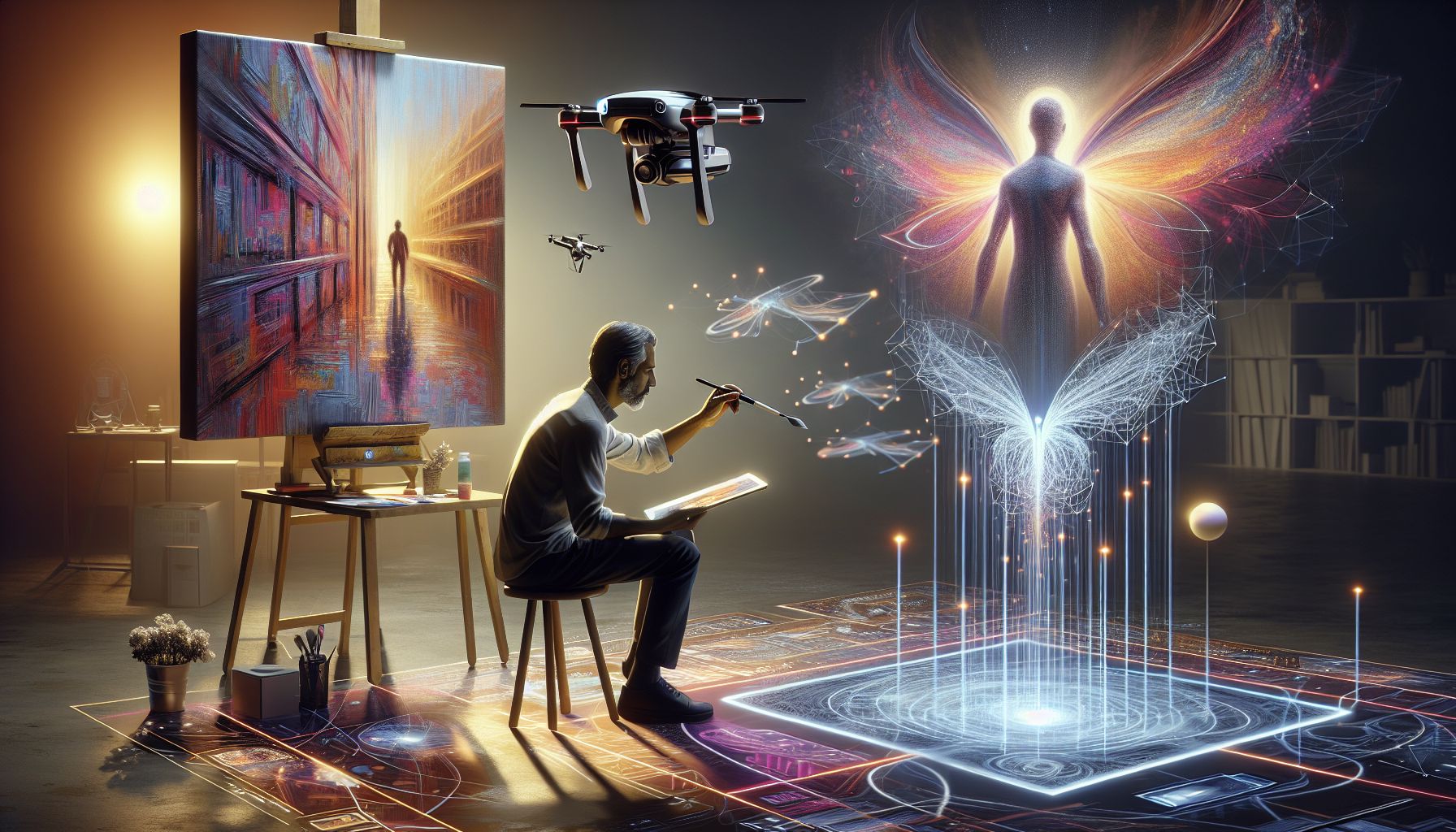
AI is often portrayed as a potential threat to human creativity, but many experienced artists see it as a collaborative tool. By using AI-powered tools, artists can amplify their craft and unlock new possibilities. AI can handle repetitive tasks, allowing artists to focus on conceptual development. It can also suggest new styles or techniques, providing fresh perspectives that might have escaped human intuition.
These artist-AI collaborations produce hybrid artworks celebrated for their innovative qualities. Projects like Google’s “DeepDream” show how neural networks can work alongside human artists to produce mesmerizing visuals that feel both familiar and alien. Adobe’s AI-based productivity tools enhance creative workflow by offering intuitive suggestions in software like Photoshop and Premiere Pro.
The Democratization of Art
Another compelling aspect of AI in the arts is how these technologies lower barriers to entry. Aspiring creators who may lack traditional art education or resources can now use AI tools to experiment, learn, and produce artworks. Platforms like Runway ML allow anyone—regardless of technical skill—to create video content, build interactive experiences, and work on art projects with minimal restrictions.
This democratization creates an inclusive environment where diverse voices can get attention. As AI continues to evolve, it could lead to a more equitable artistic ecosystem.
The Ethical and Philosophical Quandaries
The Question of Authenticity
AI’s entry into the art world comes with controversies. One major point of debate is defining what makes art authentic. When algorithms become the creators, the question of authorship emerges. Is AI art truly original, or is it a derivative of existing works from which it learns? Navigating these questions requires rethinking what creativity and originality mean.
Some purists argue that art’s soul can’t be digitized. They see AI art as an impressive imitation, but lacking the emotional depth inherent in human artistry. Others contend that collaboration with AI adds a new dimension to art, expanding definitions of creative expression rather than replacing them.
The Risk of Homogenization
Closely tied to questions of authenticity is the risk of homogenization. As AI systems draw from existing datasets, there’s concern that AI art might lead to a uniform aesthetic, reflecting the biases and limitations present in the input data. To counter this, creators must ensure diverse and inclusive data sources, making sure AI doesn’t just replicate existing trends but encourages creative evolution.
Conclusion
As we embrace AI’s future in creativity, it’s clear that this partnership is about enhancement rather than replacement. AI empowers artists to explore new dimensions of creativity, challenge conventional structures, and democratize the artistic creation process. However, this journey isn’t without challenges. Integrating AI in the arts requires ongoing dialogue to address ethical considerations, transparency in creation, and inclusivity.
The future we’re building from these partnerships has extraordinary potential if used thoughtfully. By celebrating the partnership between human and machine, we’re not just redefining art in the digital age—we’re actively creating a new narrative of what it means to be creative. Keep creating, keep questioning, and above all, keep innovating. Until next time, art lovers and tech enthusiasts alike!