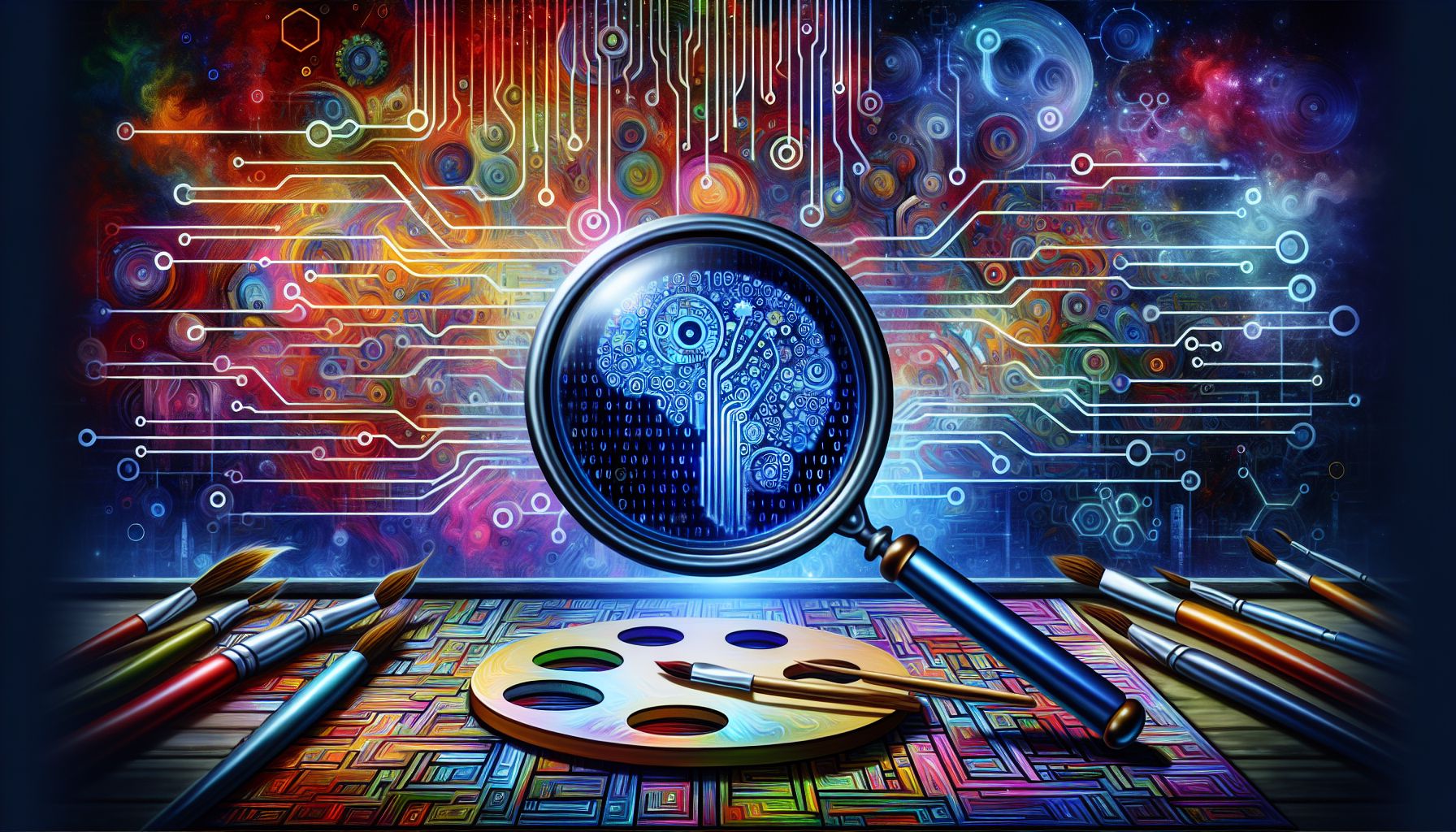
Hello, tech enthusiasts and art lovers alike! Today, I’m diving into a topic that’s got me buzzing with excitement and maybe just a bit of trepidation: the role of Artificial Intelligence in the creative arts. I’ve always been fascinated by the intersection of technology and creativity, and AI is currently sitting smack dab at the crossroads of this thrilling convergence. So grab a seat, maybe some popcorn, and let’s unpack this techno-utopian marvel, one bit at a time.
AI Meets Creativity: An Unlikely Pairing?
For the longest time, we thought of creativity as the quintessential human domain. I mean, can you imagine Michelangelo chiseling out a bot-assisted David? Unlikely! But times are changing, and AI is now dabbling in areas we once thought belonged solely to us carbon-based lifeforms. From composing symphonies to painting masterpieces and even writing stories that would make Shakespeare quiver in his pantaloons, AI has swooped into the creative arts like a digital da Vinci.
Take OpenAI’s GPT series, for example. These language models are producing stories, poems, and even code! They’ve practically moved into the creative neighborhood and we gave ’em the welcome basket.
Some Amazing Artistic Feats AI Has Pulled Off
-
Music Composition: You might’ve heard about AIVA (Artificial Intelligence Virtual Artist), the AI that composes classical music. When I first heard about it, I was skeptical. But play some of its compositions, and you might just want to pour yourself a glass of wine, sit by the fireplace, and contemplate the depths of your soul.
-
Visual Arts: Then there’s DeepArt, the neural network that can transform ordinary photos into images that mimic the styles of famous artists like van Gogh or Picasso. I once uploaded a selfie, and let’s just say the result made me look like a fiery collaboration between Salvador Dalí and a kaleidoscope.
-
Writing and Storytelling: On the writing front, AI-based tools like Sudowrite are helping authors overcome writer’s block by suggesting plot twists or crafting entire paragraphs. I tried it once and promptly spent the next fifteen minutes trying to decide if I should give my co-author credit.
The Upside of AI in Creative Arts
So, why are we letting AI tiptoe into the artists’ domain? For one, AI can act as a powerful co-creator. Imagine being a painter and having an AI assistant who knows more about color theory than a peacock on acid. Whether it’s providing new insights, erasing creative constraints, or simply being a springboard for brainstorming, AI can elevate human artistry to new heights.
Moreover, AI democratizes creativity. It provides tools to those who might not have the technical skills or artistic background to create. Picture a future where anyone can compose a symphony or paint a masterpiece with just a few clicks. Remaining awake through some of those lengthy symphonies? Well, that’s still entirely on you.
Challenges and Ethical Dilemmas
Now, before we go all-in singing AI’s praises, there are some cloudy skies on this otherwise sunny panorama. One concern is originality. Is AI-created art genuinely “creative,” or is it merely clever mimicry? Even Frankenstein’s monster was puzzled by questions of identity, and so are many of AI’s neural creations.
Then there’s the ethical question of authorship and ownership. If an AI-assisted machine paints the next “Starry Night,” who owns it? The owner of the machine? The programmer who wrote the algorithm? Or, in a very Blade Runner-esque twist, the AI itself? These are chest-thumpingly big questions fueling debates across the tech-art spectrum.
The Road Ahead: Visions for the Future
Looking forward, the future of AI in creative arts is both exciting and a tad intimidating. With advances in machine learning and neural networks, the next decade could see AI assisting in ways we can scarcely imagine. Imagine collaborations between AI and artists creating fully immersive art installations, or AI-driven orchestras playing in your living room. Good luck getting the cats to behave during those living room concerts, though.
As we build a partnership between AI and human creativity, the line between machine and human art will blur. But maybe that’s a good thing. After all, art is about evoking emotion, and if an AI can pull your heartstrings just as deftly as Bach or Monet, isn’t that a win for our ever-growing human-tech community?
Closing Thoughts
So, there you have it. A glimpse into the marvelous, slightly bewildering, world of AI in creative arts. As we stand on the edge of this new artistic revolution, it’s up to us, the tech-thinkers and art-makers, to guide this new relationship with the finesse of a maestro conducting a symphony.
I, for one, am entirely onboard this AI art rollercoaster, and eager to see where the ride takes us. Until next time, stay curious, keep doodling, and if an AI writes the Great American Novel, remember, you saw it coming here first!