
Category: Main
Posted on March 15, 2026
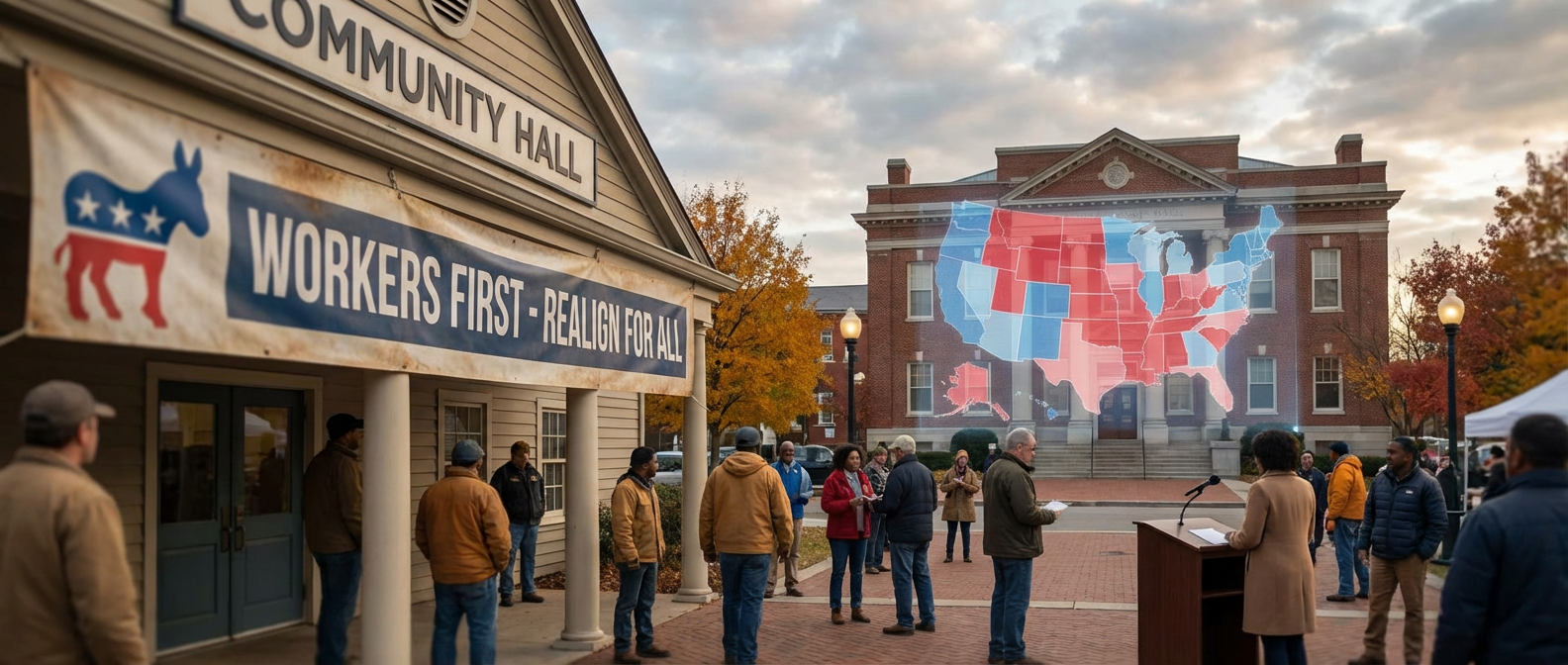
Building Populism Against the Map: Why Democrats’ 2026 Strategy Hinges on Economic Messaging and Organization
The Numbers Tell a Story of Structural Disadvantage Let’s start where every serious political conversation should start: with the map. When you look at the competitive landscape heading into 2026, you’re looking at a Democratic Party that needs …
Posted on March 14, 2026
How Zoning Became the Issue That Rewired American Politics
The Invisible Architecture That’s Now Front and Center For decades, zoning was the kind of policy that put people to sleep at city council meetings. It was technical, local, and removed from national conversation. Nobody ran for Congress …
Posted on March 14, 2026
When the Global Trade Referee Walks Off the Field: What Trump’s Tariff War Means for Your Town
The Rules-Based Order Just Hit a Speed Bump (And Nobody’s Calling the Penalty) There’s something clarifying about watching the architecture of global trade shake apart in real time. When the Trump administration announced sweeping reciprocal tariffs last April—starting …
Posted on March 14, 2026
The 2025 Immigration Showdown: How Governors Challenged Federal Authority and What It Means for Federalism
When States Push Back: The Executive Order Standoff In early 2025, the federal government issued a series of executive orders dramatically expanding interior immigration enforcement. What happened next is one of the clearest recent illustrations of how American …
Posted on March 13, 2026
The Sahel’s Structural Crisis: Why Military Coups Are Symptoms, Not Surprises
Understanding the Coup Belt as Systems Failure When we talk about the string of military takeovers across the Sahel, it’s tempting to focus on individual leaders, dramatic moments, or external villains. That’s exactly the wrong lens. What we’re …

Posted on March 13, 2026
Trump’s Second-Term Tariff Escalation: What the Numbers Tell Us About 2025’s Trade Realignment
The April Executive Order and Its Immediate Architecture In April 2025, the Trump administration signed an executive order that fundamentally restructured how the United States approaches import duties. The order established a 10% universal baseline tariff on virtually …
Updated on March 9, 2026
The Three-Minute Rule That Changed How I Watch Democracy Work
Why Most Public Comments Miss the Mark Last Tuesday night, I watched a retiree named Margaret speak for exactly two minutes and forty-seven seconds at our city council meeting. She had data on pedestrian accidents at the intersection …
Updated on March 9, 2026
Why Voting Rights Battles Look Like Railroad Wars (And What That Teaches Us)
The Map Wars of 1870 Picture this: It’s 1870, and a Black carpenter named William Still is trying to vote in a Philadelphia precinct. The polling place has mysteriously moved three times in two weeks. No posted notices. …