
The Numbers Tell a Story of Structural Disadvantage
Let’s start where every serious political conversation should start: with the map. When you look at the competitive landscape heading into 2026, you’re looking at a Democratic Party that needs to swim upstream against both geography and momentum. According to the Cook Political Report: 2026 House Ratings, there are roughly 47 House seats genuinely in play this cycle. That sounds like opportunity until you remember what Republicans are defending: a 220-215 majority so razor-thin that it essentially eliminates their margin for error. In practical terms, Democrats need to flip just a handful of seats to reclaim the House, but Republicans only need to hold their ground.
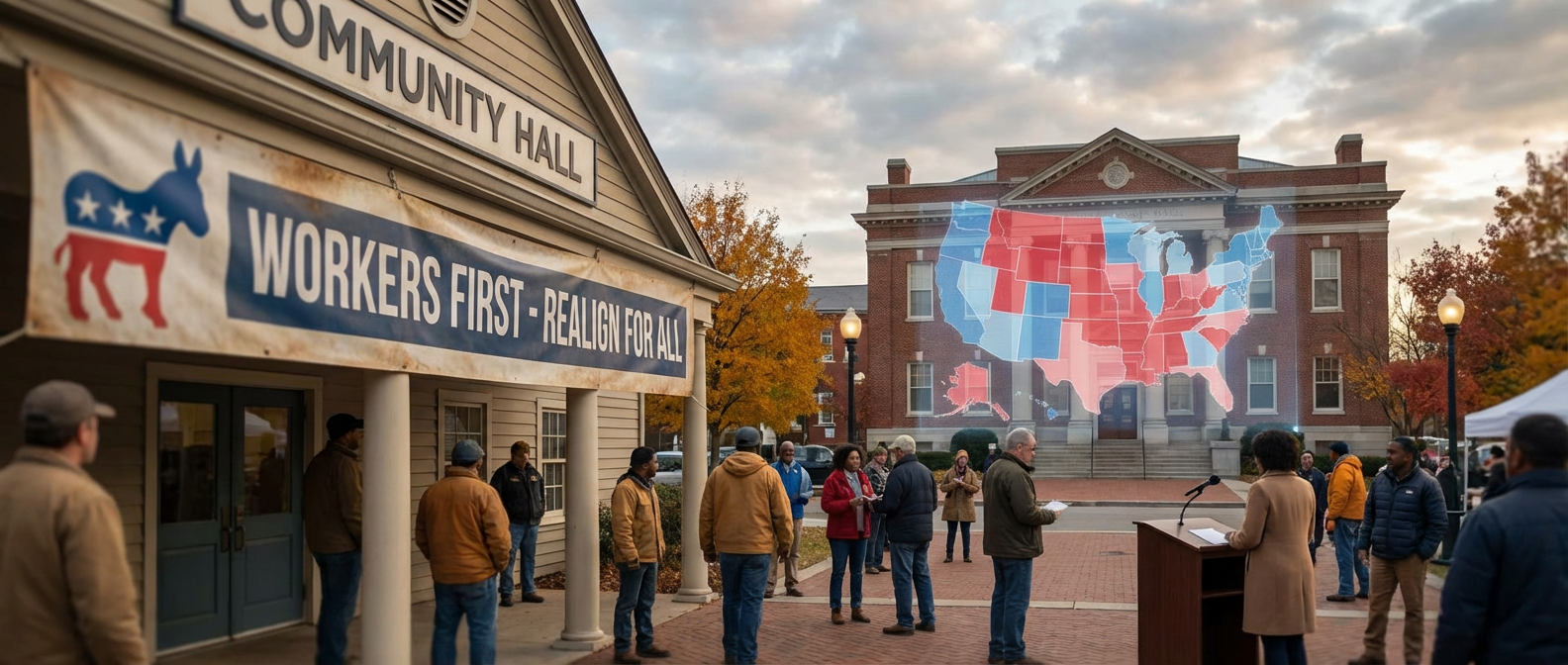
The Senate picture is even more daunting. Democrats are defending 22 of the 33 Senate seats on the ballot in 2026. That’s not a typo. When you’re defending two-thirds of the contested seats, you’re not playing defense in the traditional sense anymore—you’re trying to minimize losses while playing offense on someone else’s terrain. Competitive races in Georgia, Michigan, and New Hampshire tell you where the battleground actually sits, and it’s in places where Democrats have been losing ground in recent cycles. The structural map is not friendly.
The Economic Populism Bet: What the Unity Task Force Actually Understands
Here’s where this gets interesting. Democrats aren’t ignoring the map—they’re trying to redraw the game through message. The Democratic Party’s Unity Task Force, which included Michigan Governor Gretchen Whitmer after the party’s internal post-2024 autopsy, released a policy platform in 2025 that signals a deliberate strategic shift. The emphasis on industrial policy and housing affordability isn’t accidental. These are kitchen-table issues that cut across the traditional geographic and demographic divides that have been sorting Americans into hardened political camps.
Economic populism has always been the Democratic Party’s strongest rhetorical tradition, but it got lost for a while. What Whitmer and others on that task force seem to understand is that you win back Michigan, Pennsylvania, and Wisconsin—the states that actually determine national elections—by talking about jobs you can do without a college degree, about homes people can actually afford to buy, about the concrete ways federal policy shapes whether your paycheck stretches or shrinks. This isn’t centrist triangulation. It’s recognizing that populism, done right, doesn’t have a demographic ceiling.
The Inflation Ghost and Independent Voter Reality
You want to know what keeps Democratic strategists awake at night? It’s not abstract ideology. According to Gallup polling from January 2026, President Trump’s job approval sits at 44 percent, but economic anxiety dominates independent voter concerns at 61 percent. That’s not a typo either. A super-majority of persuadable voters are worried about the economy, even as they’re not solidly opposed to the current president. Inflation cooled to 3.4 percent as of December 2025 according to Bureau of Labor Statistics data, but it remains the ghost at every dinner table in America. People feel its legacy.
This creates both a challenge and an opportunity. Independent voters—the actual deciders in close elections—are economically anxious. They’re ready to listen to someone who speaks their language. But they’re not automatically going to listen to Democrats just because Republicans hold the presidency. Democrats have to earn that attention by offering something concrete, something that feels like it was built for the person working the job they’re doing, not for some imagined future or some college-educated professional class.
The Fundraising Problem Nobody’s Talking About Enough
There’s one number that should genuinely concern anyone who takes Democratic electoral prospects seriously. Small-dollar fundraising—the grassroots money that builds campaign infrastructure and reaches voters—fell 18 percent in the third quarter of 2025 compared to the same period before the 2022 midterms, according to Federal Election Commission filings analyzed by OpenSecrets. You can see the campaign finance data yourself at OpenSecrets: 2026 Campaign Finance Tracker, and the trend line should alarm you.
What does this mean in practice? Democratic candidates in those 47 competitive House races are going to have less money to spend on field operations, digital ads, and voter contact than they’d ideally like. Smaller margins for error. The economic populism message, however smart and well-crafted, needs to connect with voters through earned media and grassroots organizing rather than just paid advertising. Which, honestly, might be a feature rather than a bug—earned trust tends to outlast paid attention. But it’s still a real constraint that strategists have to reckon with.
Why This Matters Beyond November 2026
The real question isn’t whether Democrats can flip 47 competitive seats or hold 22 Senate seats. Those are important tactical questions, but they’re not the deepest one. The deepest question is whether a major political party can successfully rebuild its coalition through an intentional strategic realignment. Can Democrats actually use economic populism—not as a slogan, but as a governing philosophy—to overcome structural geographic disadvantage? That’s what 2026 is really testing.
You don’t need me to tell you how to vote. What you should do is understand what’s actually at stake. Pay attention to how candidates in your district are talking about jobs and housing. Notice which ones are offering concrete economic plans and which ones are trading in abstractions. Read the policy platforms. Look at who’s actually organizing in your neighborhood. These aren’t academic exercises. They’re how you figure out which politicians have thought seriously enough about your economic circumstances to have actual solutions. Democracy works best when voters do this work. It’s also the only way any party can expect to overcome structural disadvantages. Voters who show up with clear eyes and real expectations change the map in ways no analyst predicted.