
Building Populism Against the Map: Why Democrats’ 2026 Strategy Hinges on Economic Messaging and Organization

The Numbers Tell a Story of Structural Disadvantage

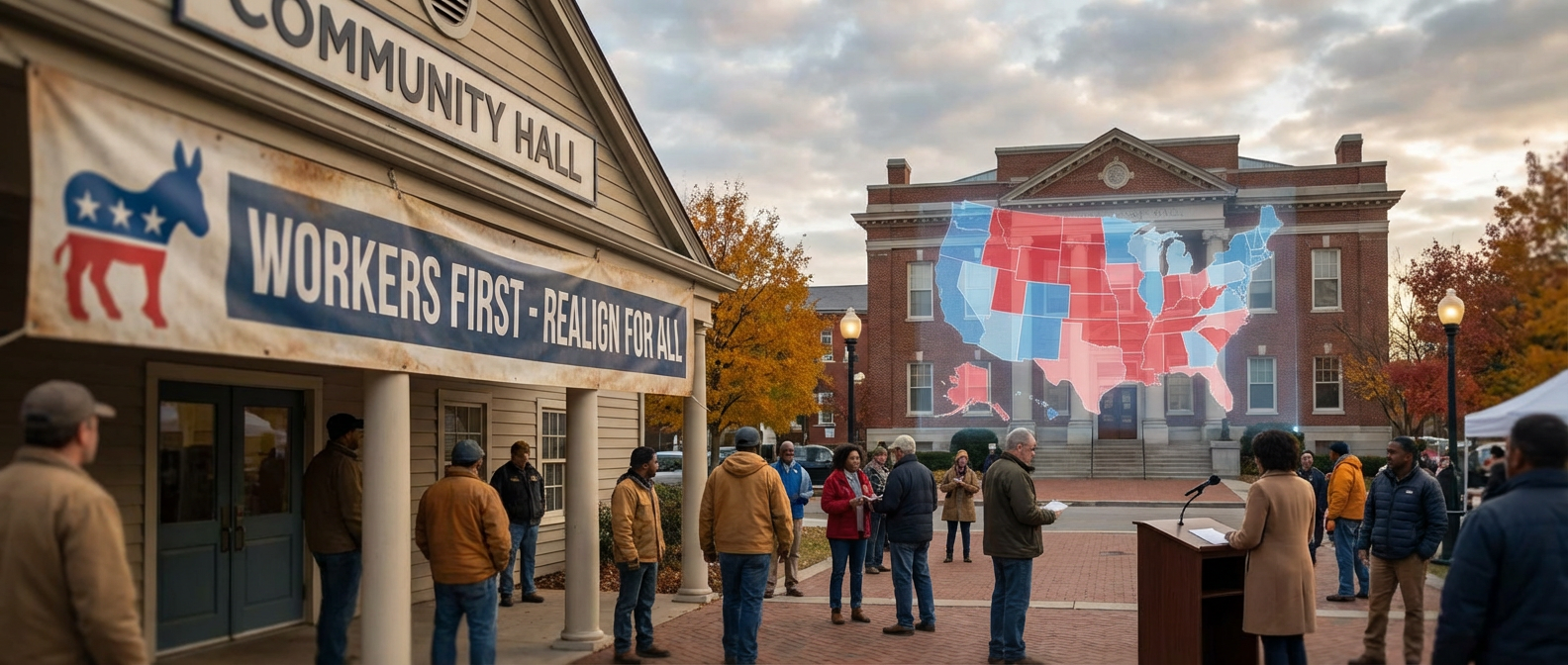
Let’s start where every serious political conversation should start: with the map. When you look at the competitive landscape heading into 2026, you’re looking at a Democratic Party that needs to swim upstream against both geography and momentum. According to the Cook Political Report: 2026 House Ratings, there are roughly 47 House seats genuinely in play this cycle. That sounds like opportunity until you remember what Republicans are defending: a 220-215 majority so razor-thin that it essentially eliminates their margin for error. In practical terms, Democrats need to flip just a handful of seats to reclaim the House, but Republicans only need to hold their ground.

Building Populism Against the Map: Why Democrats' 2026 Strategy Hinges on Economic Messaging and Organization
Building Populism Against the Map: Why Democrats’ 2026 Strategy Hinges on Economic Messaging and Organization

The Senate picture is even more daunting. Democrats are defending 22 of the 33 Senate seats on the ballot in 2026. That’s not a typo. When you’re defending two-thirds of the contested seats, you’re not playing defense in the traditional sense anymore—you’re trying to minimize losses while playing offense on someone else’s terrain. Competitive races in Georgia, Michigan, and New Hampshire tell you where the battleground actually sits, and it’s in places where Democrats have been losing ground in recent cycles. The structural map is not friendly.

The Economic Populism Bet: What the Unity Task Force Actually Understands

Here’s where this gets interesting. Democrats aren’t ignoring the map—they’re trying to redraw the game through message. The Democratic Party’s Unity Task Force, which included Michigan Governor Gretchen Whitmer after the party’s internal post-2024 autopsy, released a policy platform in 2025 that signals a deliberate strategic shift. The emphasis on industrial policy and housing affordability isn’t accidental. These are kitchen-table issues that cut across the traditional geographic and demographic divides that have been sorting Americans into hardened political camps.

Economic populism has always been the Democratic Party’s strongest rhetorical tradition, but it got lost for a while. What Whitmer and others on that task force seem to understand is that you win back Michigan, Pennsylvania, and Wisconsin—the states that actually determine national elections—by talking about jobs you can do without a college degree, about homes people can actually afford to buy, about the concrete ways federal policy shapes whether your paycheck stretches or shrinks. This isn’t centrist triangulation. It’s recognizing that populism, done right, doesn’t have a demographic ceiling.

The Inflation Ghost and Independent Voter Reality

You want to know what keeps Democratic strategists awake at night? It’s not abstract ideology. According to Gallup polling from January 2026, President Trump’s job approval sits at 44 percent, but economic anxiety dominates independent voter concerns at 61 percent. That’s not a typo either. A super-majority of persuadable voters are worried about the economy, even as they’re not solidly opposed to the current president. Inflation cooled to 3.4 percent as of December 2025 according to Bureau of Labor Statistics data, but it remains the ghost at every dinner table in America. People feel its legacy.

This creates both a challenge and an opportunity. Independent voters—the actual deciders in close elections—are economically anxious. They’re ready to listen to someone who speaks their language. But they’re not automatically going to listen to Democrats just because Republicans hold the presidency. Democrats have to earn that attention by offering something concrete, something that feels like it was built for the person working the job they’re doing, not for some imagined future or some college-educated professional class.

The Fundraising Problem Nobody’s Talking About Enough

There’s one number that should genuinely concern anyone who takes Democratic electoral prospects seriously. Small-dollar fundraising—the grassroots money that builds campaign infrastructure and reaches voters—fell 18 percent in the third quarter of 2025 compared to the same period before the 2022 midterms, according to Federal Election Commission filings analyzed by OpenSecrets. You can see the campaign finance data yourself at OpenSecrets: 2026 Campaign Finance Tracker, and the trend line should alarm you.

What does this mean in practice? Democratic candidates in those 47 competitive House races are going to have less money to spend on field operations, digital ads, and voter contact than they’d ideally like. Smaller margins for error. The economic populism message, however smart and well-crafted, needs to connect with voters through earned media and grassroots organizing rather than just paid advertising. Which, honestly, might be a feature rather than a bug—earned trust tends to outlast paid attention. But it’s still a real constraint that strategists have to reckon with.

Why This Matters Beyond November 2026

The real question isn’t whether Democrats can flip 47 competitive seats or hold 22 Senate seats. Those are important tactical questions, but they’re not the deepest one. The deepest question is whether a major political party can successfully rebuild its coalition through an intentional strategic realignment. Can Democrats actually use economic populism—not as a slogan, but as a governing philosophy—to overcome structural geographic disadvantage? That’s what 2026 is really testing.

You don’t need me to tell you how to vote. What you should do is understand what’s actually at stake. Pay attention to how candidates in your district are talking about jobs and housing. Notice which ones are offering concrete economic plans and which ones are trading in abstractions. Read the policy platforms. Look at who’s actually organizing in your neighborhood. These aren’t academic exercises. They’re how you figure out which politicians have thought seriously enough about your economic circumstances to have actual solutions. Democracy works best when voters do this work. It’s also the only way any party can expect to overcome structural disadvantages. Voters who show up with clear eyes and real expectations change the map in ways no analyst predicted.

How Zoning Became the Issue That Rewired American Politics

The Invisible Architecture That’s Now Front and Center

For decades, zoning was the kind of policy that put people to sleep at city council meetings. It was technical, local, and removed from national conversation. Nobody ran for Congress talking about lot size restrictions or setback requirements. But something shifted, and it shifted hard. By 2026, housing affordability and zoning reform had become one of the central kitchen table issues of American politics, talked about in state legislatures and federal policy discussions with the urgency usually reserved for tax policy or healthcare. This wasn’t an accident. It was the inevitable result of structural problems finally becoming impossible to ignore.

The core problem is straightforward: the United States is short somewhere between 4 and 7 million housing units. That’s not a minor shortage. That’s a gap that touches nearly every American, whether they know it or not. When you can’t build enough housing, prices don’t stabilize at some reasonable level. They rise. They keep rising. They rise until normal people in normal jobs start doing the math and realize they cannot afford to live in the places where their careers are. This isn’t about luxury condos or vanity projects. This is about the basic functioning of the economy and the basic ability of working people to live where opportunity exists.

When Local Decisions Became National Priorities

What pushed housing into national politics was the collision between local control and federal leverage. During the 2023-2024 period, the Biden administration attempted something genuinely innovative: tying federal infrastructure grants to local zoning reform. The logic was clean. If you wanted federal money for transit, broadband, or other infrastructure, you had to show a willingness to reform zoning codes that prevented multifamily housing construction. It was federalism as a tool for reform, using the carrot of funding rather than the stick of mandate.

This approach created exactly the kind of pressure that changes behavior. Cities faced a choice: stay ideologically pure with their single-family-only zoning, or access funding that could transform their infrastructure. Some chose reform. Many didn’t. The political pain of that choice, however, made housing visible in a way it hadn’t been before. When a mayor has to publicly explain to taxpayers why a federal grant was turned down, housing stops being invisible.

Then 2025 brought a reversal. New executive orders eliminated those federal zoning incentives, removing the lever that had started pushing local governments toward reform. But here’s what’s worth understanding: the problem didn’t go away. The shortage of 4 to 7 million units is still there. Prices are still rising. The pressure is still building. Removing the federal incentive doesn’t eliminate the underlying dysfunction. It just means the pressure will build through different channels.

Learning from Places That Actually Changed

Minneapolis offers perhaps the clearest case study of what zoning reform can actually accomplish. In 2023, the city eliminated single-family zoning citywide. It was bold, controversial, and genuinely path-breaking. A 2025 University of Minnesota study found something concrete: rents in Minneapolis grew 6 percent slower than in comparable peer cities. That’s not theoretical. That’s real money in people’s pockets. When you can build more housing, you don’t necessarily solve affordability overnight, but you do change the trajectory. You prevent the worst of the crisis.

California attempted something similar at the state level. SB 9 and SB 10 legalized duplexes and multifamily housing near transit across the entire state, bypassing individual city decisions. This was structural reform with teeth. But here’s where implementation meets politics: by 2025, over 120 municipalities had found ways to obstruct or slow implementation. Some didn’t approve the zoning. Some didn’t provide necessary infrastructure support. Some simply waited, knowing that opposition at the local level creates enough friction that change slows. The state passed the law, but the locality ultimately controls the pace of implementation.

This pattern reveals something important about how change actually happens in a federal system. Laws matter. Incentives matter. But local control is remarkably powerful. Real reform requires either buying local support or overwhelming local resistance with enough federal leverage that compliance becomes the path of least resistance. The current political moment is really a fight about which of those two approaches we should be using.

The Economics of Who Pays for Restrictive Zoning

Here’s where the analysis gets more urgent. Research from the Brookings Institution Housing and Zoning Research has quantified something we often discuss abstractly: exclusionary zoning, the practice of restricting housing supply through regulation, costs the average American worker approximately $8,775 annually in lost wages. This happens because when workers can’t afford to move to high-productivity metropolitan areas, they stay in lower-productivity regions where their wages are lower. The entire economy becomes less efficient. Individual paychecks become smaller. Economic growth slows.

This is why housing has become a political issue that cuts across traditional left-right divides in interesting ways. Younger voters see unaffordable markets and want more housing built. Some conservative economists see restrictive zoning as a market distortion that should be removed. Some progressive urbanists see single-family zoning as an exclusionary tool with real racial and economic consequences. The coalition for reform is messy and ideologically mixed, but it exists. The coalition for the status quo is also powerful, though: existing homeowners whose property values depend on restricted supply.

Data from the National Low Income Housing Coalition Data shows that this problem hits lower-income households hardest, who spend disproportionate shares of income on housing. But it’s not strictly a low-income problem. Middle-class workers face the same pressure. Young professionals face it acutely. The affordability crisis is broad enough that it touches almost everyone, even if in different ways.

Why This Stays Messy and What That Means

The political structure of housing reform suggests this will remain contentious and site-specific. Local governments have real power. State governments have real power. The federal government has leverage through funding but not direct control over zoning. That means real change happens through negotiation, through building coalitions, and through elections where local candidates stake out positions on zoning and housing. It means some cities will reform and others won’t. It means some states will push hard and others won’t. It means the problem doesn’t get solved nationally, but rather worked on inconsistently across hundreds of jurisdictions.

This isn’t a bug in the system. It’s a feature. Federalism creates space for experimentation. Minneapolis tries something and succeeds. Others can see it and copy it or modify it. California pushes hard and encounters resistance that teaches everyone something about where the real constraints are. The messiness is actually how democratic change happens, especially around issues where powerful incumbent interests benefit from the status quo.

What matters now is understanding the structure beneath the politics. Housing isn’t expensive because of greed or conspiracy. It’s expensive because zoning laws in many places prevent construction of new housing, keeping supply artificially low. Fix the zoning and you don’t fix everything, but you address a major source of the problem. The question is whether enough political actors at enough levels of government will decide that fixing zoning is worth the political cost of changing local rules. That’s a structural question being decided through democratic politics, one city and one election at a time.

When the Global Trade Referee Walks Off the Field: What Trump’s Tariff War Means for Your Town

The Rules-Based Order Just Hit a Speed Bump (And Nobody’s Calling the Penalty)

There’s something clarifying about watching the architecture of global trade shake apart in real time. When the Trump administration announced sweeping reciprocal tariffs last April—starting with a baseline 10% tax on all imports and climbing as high as 145% on Chinese goods—it wasn’t just another political headline. It was a moment when decades of negotiated international rules suddenly felt optional, like a game of pickup basketball where everyone’s arguing about whether traveling was actually called.

Here’s what makes this different from previous tariff disputes: the World Trade Organization, the institution designed to referee these exact conflicts, has been basically unable to do its job since 2019. The United States deliberately blocked the appointment of judges to the WTO’s Appellate Body—the court that settles trade disputes. So when countries started filing complaints about these new tariffs, there was no functioning referee to call them fair or foul. The entire dispute resolution system, which took decades to build and has actually worked pretty well for settling disagreements without turning them into full-scale trade wars, is sitting on the sidelines.

The WTO Crisis Isn’t New, But the Consequences Are Getting Sharper

Before you dismiss the WTO as just another boring international body, understand what it actually does. When your city’s small manufacturers need to export goods to Europe, or when distributors want to import materials at reasonable costs, the WTO’s rules and dispute resolution process make that possible. When countries disagree about trade practices, they don’t just threaten each other—they take their case to an international court. It’s imperfect, but it’s been remarkably stable. That stability matters economically.

The Appellate Body crisis didn’t happen by accident. For a detailed look at exactly how this system broke down and what it means for global commerce, you can read through the WTO dispute settlement and Appellate Body crisis overview. The short version: the U.S. objected to how the Appellate Body was interpreting trade rules, so it just stopped allowing new judges to be appointed. Without new judges, the court couldn’t function. It’s like dissolving your city council because you don’t like their zoning decisions, then acting surprised when nobody knows who’s making land-use rules anymore.

Now that dispute resolution mechanism is basically broken. When the European Union needed to respond to the new American tariffs with retaliatory measures targeting approximately €21 billion worth of U.S. goods, they couldn’t appeal to the WTO to stop them. They couldn’t even get a ruling on whether the American tariffs themselves violated international agreements. Instead, both sides negotiated a 90-day pause before the real escalation could kick in. This is what a trade relationship looks like when the rule book stops mattering.

The Real Price Tag: Watch Your Local Economy Absorb the Shock

International trade disputes sound abstract until you zoom in on what actually happens in communities. The International Monetary Fund released its April 2025 World Economic Outlook with a sobering message: global growth forecasts were downgraded by half a percentage point specifically because of trade policy uncertainty. Half a point might sound small, but at a global scale it means millions of jobs, thousands of businesses, real people’s retirement savings and college funds.

For your hometown, that uncertainty translates into concrete things. Manufacturing plants hesitate before expanding because they don’t know what their input costs will be in six months. Retail stores raise prices on imported goods, passing costs to consumers who are already stretched thin. Agricultural regions dependent on export markets face sudden tariff walls they didn’t negotiate and can’t predict. A farmer in Iowa or a factory manager in Pennsylvania can’t plan for next year’s production when the basic rules of international commerce are being rewritten week by week through executive announcements.

You can dive deeper into the economic projections by checking the IMF World Economic Outlook April 2025. What you’ll find is that the uncertainty itself—not just the tariffs—is depressing economic growth. Businesses need predictability to invest. When the rules change suddenly and there’s no appeal process, they stop investing.

Supply Chains Reroute, Winners and Losers Emerge Overnight

One of the clearest signs that the old trade order is actually breaking down comes from watching where products go. China’s exports to Southeast Asian nations surged by roughly 18% in the second half of 2025 as companies figured out they could dodge American tariffs by moving supply chains through other countries. This isn’t surprising—it’s what happens when you throw up walls without a functioning international mechanism to enforce them. Companies adapt. Supply chains shift. But those shifts create real disruptions.

For communities that depend on particular supply chains or have specialized manufacturing, this reorientation can be devastating or beneficial depending on where you sit. A town that relied on Chinese imports coming directly might suddenly find those goods arriving through Vietnam or Indonesia with added costs. A region that hosts warehousing and transshipment facilities might see new business arrive. A factory that makes components for a particular product might find new customers or lose existing ones overnight as global sourcing strategies change. This isn’t happening somewhere abstract. It’s happening in real places, affecting real jobs.

Can We Fix This, Or Are We Entering a New Era?

The big question underneath all of this is whether the rules-based trade order is actually finished, or whether this is a crisis point that could lead to reform. There’s a genuine argument that the WTO needed updating—it was built for a world that existed in 1995, not 2025. Global supply chains look completely different. Digital trade barely existed. But updating the rules requires cooperation and a shared commitment to having rules at all. When major powers decide they’d rather negotiate bilaterally or threaten tariffs unilaterally, the whole system gets harder to repair.

Here’s what I think matters most as you follow this: pay attention to what happens in your own region. Does local manufacturing get hit hard? Do consumer prices rise? Do new trade relationships emerge between your area and other parts of the world? These local effects are where you can actually see whether the globalization that’s defined the last thirty years is shifting into something else. They’re also where you can see whether your elected representatives are actually advocating for your region’s interests or just going along with whatever’s decided in Washington.

This isn’t just politics happening somewhere else. This is the actual structure of world commerce reorganizing itself. Your job is to watch it, understand it, and hold people accountable for whether they’re protecting your community’s interests in the process. What economic changes have you noticed happening in your own area? I’d genuinely like to hear what you’re seeing on the ground.

The 2025 Immigration Showdown: How Governors Challenged Federal Authority and What It Means for Federalism

When States Push Back: The Executive Order Standoff

In early 2025, the federal government issued a series of executive orders dramatically expanding interior immigration enforcement. What happened next is one of the clearest recent illustrations of how American federalism actually works when the philosophical rubber meets the road. At least eleven governors, representing states as geographically and politically diverse as California, Illinois, Colorado, and New York, responded by issuing their own executive directives. These orders essentially told their state law enforcement agencies: you will not participate in these federal immigration operations unless there is a judicial warrant involved.

The 2025 Immigration Showdown: How Governors Challenged Federal Authority and What It Means for Federalism

This wasn’t theater. These governors were making a calculated constitutional argument that had teeth. They were leveraging a legitimate principle of federalism that dates back to the Tenth Amendment: states retain powers not delegated to the federal government. The specific claim was even narrower. They argued that states cannot be conscripted into federal immigration enforcement. Law enforcement agencies, they contended, had the authority to set their own priorities about how to deploy resources.

What makes this moment particularly instructive is that it forced everyone to confront a question that sounds simple but has troubled constitutional scholars for generations: when does the federal government have the power to compel state cooperation? The Constitution is oddly quiet on this. We had legal theories. We had decades of case law. But in 2025, we had a genuine collision between two branches of the federal government and multiple states, all interpreting that constitutional silence in opposite ways.

Illustration for The 2025 Immigration Showdown: How Governors Challenged Federal Authority and What It Means for Federalism

The Courts Enter the Arena: Litigation as Constitutional Dialogue

The Department of Justice responded by filing federal preemption lawsuits against four states by mid-2025. The federal government was essentially saying: we have exclusive authority over immigration. Your state laws conflict with that authority. Therefore your laws are unconstitutional. The litigation machine activated. Briefs were filed. Oral arguments were scheduled. And then something genuinely important happened in July 2025 when the U.S. District Court for the Northern District of Illinois issued a preliminary injunction.

The court blocked portions of the federal enforcement directive. This is where history feels relevant in ways that current politics sometimes obscures. Courts do not typically tell the executive branch that it cannot enforce immigration law. That’s settled constitutional terrain. But what the Illinois court appeared to be saying was more careful than that: there are limits to how the federal government can pressure states to participate. The court’s preliminary injunction suggested that federalism principles matter, even in an area as traditionally federal as immigration.

The litigation will continue. These preliminary injunctions are not final. But they matter because they signal something real: the federal courts may be willing to police the boundaries of coercion between the national government and the states. This echoes the Supreme Court’s reasoning in cases like Printz v. United States (1997) and National Federation of Independent Business v. Sebelius (2012), where the Court held that Congress cannot simply commandeer state officials to execute federal law. Whether that principle applies to state executives resisting federal immigration enforcement remains genuinely unsettled.

The Numbers Behind the Policy: What the Data Actually Shows

So what was the practical effect of all this legal maneuvering? ICE’s Fiscal Year 2025 enforcement statistics reported over 185,000 interior arrests, the highest annual total since 2011 according to Department of Homeland Security operational data released in November 2025. That number tells a story that sometimes gets lost in the constitutional debate. Even with sanctuary policies in place in multiple states, federal immigration enforcement continued at substantial scale. The executive orders expanded the definition of who could be prioritized for removal. The enforcement machinery ran efficiently in cooperation with states that chose to participate.

But here is what makes the data genuinely interesting from a civics standpoint: it shows us that state resistance had real effects even if it did not stop federal enforcement entirely. The states that limited cooperation created friction. That friction altered how and where enforcement occurred. ICE had to invest more resources in states without state police cooperation. They could not depend on local jails to hold people on immigration detainers. The enforcement happened, but it happened differently.

What about the core empirical claim that motivated much of the federal enforcement expansion: the idea that sanctuary policies increase crime? A September 2025 Stanford Immigration Policy Lab study examined exactly this question. They found that counties with sanctuary policies experienced no statistically significant difference in violent crime rates compared to non-sanctuary counties. This matters not because it settles the policy debate, but because it grounds the debate in actual evidence rather than assumption. Stanford Immigration Policy Lab Research continues to produce work on these questions, and the 2025 findings suggest that the empirical case for sanctuary policies being criminogenic simply isn’t there.

A Legislative Cascade: How Many States Actually Changed Their Laws

While the headlines focused on high-profile governors issuing executive directives, something quieter but potentially more durable was happening in state legislatures. The National Conference of State Legislatures tracked 47 state-level bills introduced in 2025 dealing specifically with state and local enforcement of federal immigration priorities. Of those 47 bills, 14 were signed into law. That’s roughly a 30 percent success rate, which is actually substantial for what were genuinely contentious pieces of legislation. You can explore the full landscape of state immigration policymaking through National Conference of State Legislatures: Immigration Policy Database.

This legislative activity matters because it transforms temporary executive orders into more permanent policy structures. An executive order can be reversed by the next governor or blocked by a court. A statute requires legislative consensus. It’s harder to undo. Of the 14 bills that became law, some reinforced sanctuary protections. Others moved in the opposite direction, creating stronger incentives for local law enforcement to cooperate with federal immigration authorities. The pattern shows us that 2025 was not a moment of uniform state resistance. It was a moment of genuine federalist pluralism, with states making different choices based on their own political contexts and constitutional convictions.

What This Teaches Us About Constitutional Government

Here is what strikes me about the 2025 immigration enforcement conflict as both a historical and civics matter. It is not unprecedented. States have resisted federal authority on issues from slavery to civil rights to environmental regulation. But each iteration teaches us something new about how federalism actually functions when it matters. In 2025, we saw that the Constitution’s silence on whether states must cooperate with federal enforcement is not a weakness. It’s an invitation for constitutional dialogue between the branches and between the federal and state governments.

The courts stepped in. Governors tested the boundaries. Legislatures wrote laws. ICE continued to enforce. The system produced friction, but it also produced what constitutional democracy is supposed to produce: competing claims tested in law, competing interests heard, and ultimate outcomes shaped by courts and voters and elected officials who have to explain their choices to constituents. That is messy. It is inefficient. And it is exactly what the founders designed.

If you care about how federalism actually works rather than how civics textbooks describe it, the 2025 immigration enforcement conflict deserves your sustained attention. The litigation will continue for years. The legislative momentum in various states will shift and flow. ICE will adjust its operations. All of that is democracy in motion at multiple levels of government simultaneously. Pay attention to your own state’s response. Research how your state legislators voted on these bills. Understand the arguments both sides were making. This is the real substance of how Americans govern themselves.

The Sahel’s Structural Crisis: Why Military Coups Are Symptoms, Not Surprises

Understanding the Coup Belt as Systems Failure

When we talk about the string of military takeovers across the Sahel, it’s tempting to focus on individual leaders, dramatic moments, or external villains. That’s exactly the wrong lens. What we’re watching is a systemic collapse of the security and governance architecture that Western powers, primarily France, spent decades constructing. Mali, Burkina Faso, Niger, and Chad have all experienced military coups or severe constitutional crises since 2020. Analysts at the Africa Center for Strategic Studies: Coup Tracker and Sahel Analysis have termed this phenomenon a “coup belt.” But calling it a belt implies a pattern. What we’re really seeing is the unraveling of entire state systems under pressure.

Think of it this way: if you design a security architecture that depends almost entirely on external military presence, external funding, and external decision-making, then remove that external force, what do you expect to happen? The structures collapse because they were never built to function independently. That’s not a judgment about the people of the Sahel. It’s an observation about how international relationships create dependencies that, once severed, leave institutional vacuums. Those vacuums get filled by whoever has the capacity to fill them, usually military actors who’ve been sidelined by civilian governments that lacked real legitimacy anyway.

The Collapse of France’s Twenty-Year Gamble

Operation Barkhane was supposed to be different. When France deployed up to 5,100 troops at its peak, the theory was solid on paper: provide security, build partner capacity, enable local forces to take the lead. By mid-2025, France had formally completed its military withdrawal from both Mali and Niger, ending nearly a decade of this experiment. What happened wasn’t a sudden crisis. It was the predictable result of a strategy that never addressed the underlying political economy of the region.

French forces were treating symptoms while the disease spread. Terrorist groups like JNIM and Islamic State in the Greater Sahara weren’t appearing out of nowhere. They thrived because they offered something that weak, corrupt, or absent state institutions didn’t: order, albeit brutal order. They provided services, arbitrated disputes, and demonstrated capacity. Meanwhile, the government forces that France trained and equipped were often more interested in predatory rent-seeking than actually protecting civilians. When young soldiers watched their officers traffic in contraband or look the other way while armed groups operated, their faith in the system evaporated. Is it really surprising that military officers eventually decided they could do it themselves and took power?

The French withdrawal wasn’t a sudden policy shift. It was the inevitable endpoint of a relationship that had outlived its usefulness for both sides. Malian, Burkinabé, and Nigerien military leaders saw French presence as a constraint on their power. French policymakers saw their mission as unwinnable without political will that simply didn’t exist. Both were right.

The Vacuum and Who’s Filling It

Here’s where the structural analysis gets really interesting. Power vacuums don’t stay empty. When France stepped back, someone else stepped forward. Russia’s Africa Corps, which inherited the operational footprint of Wagner Group operations following Yevgeny Prigozhin’s death in 2023, now has an estimated 2,000 to 3,000 personnel operating across the Sahel as of late 2025 according to U.S. Africa Command. That’s not a coincidence. That’s competition for influence expressed through military deployment.

What matters isn’t that it’s Russia instead of France. What matters is that the underlying dynamic remains unchanged: external military actors with their own strategic interests are shaping internal politics. The soldiers in Bamako, Ouagadougou, and Niamey might now be working with Russian advisors instead of French ones, but they’re still soldiers who believe their country’s problems need military solutions. The shift in patronage doesn’t address the actual question: how do you build legitimate, accountable state institutions that can govern effectively? It just changes which external power gets a seat at the table while that question goes unanswered.

When Institutions Fracture: The ECOWAS Withdrawal

One of the most consequential developments got less international attention than it deserved. The Alliance of Sahel States, comprising Mali, Burkina Faso, and Niger, formally withdrew from ECOWAS in January 2025. That’s not just politics. That’s the fracturing of the primary multilateral framework for West African security and governance. ECOWAS, the Economic Community of West African States, has been the institution through which West African countries were supposed to coordinate on everything from trade to security to democratic norms.

When core members exit, the whole structure weakens. This wasn’t driven by whimsy. The coup governments of the Sahel saw ECOWAS as threatening their legitimacy through sanctions and pressure to return to civilian rule. So they left. From their perspective, the calculation was simple: ECOWAS was an obstacle, not a support system. The real question is why these governments felt they could afford to abandon regional institutional membership. The answer: they found alternative sources of support and legitimacy, primarily through military-to-military relationships with Russia and through appeals to national sovereignty against what they framed as external interference.

This is the cascading effect of institutional collapse. One breakdown triggers others. When central governments fail to provide security and services, military coups become possible. When military coups come to power, they often face external pressure from regional organizations. When they face that pressure, they exit those organizations. When they exit, the regional framework weakens further, making it easier for future crises to spiral.

The Humanitarian Cost of Structural Failure

All of this happens against a backdrop that deserves constant emphasis: human suffering that’s increasing, not decreasing. According to the UN OCHA Sahel Humanitarian Situation Report 2025, 10.6 million people in the central Sahel face acute food insecurity as of late 2025. That’s a 40 percent increase from 2022 levels. This isn’t separate from the political crisis. It’s the same crisis viewed from ground level.

When state capacity collapses, people can’t farm safely. When terrorist groups control territory, humanitarian organizations can’t deliver assistance. When governments turn inward to consolidate military power, they’re not investing in agriculture, healthcare, or education. The coups aren’t causing the humanitarian emergency directly, but they’re happening in a context where institutional failure has already created massive vulnerability. Military takeovers then make it harder to reverse that trajectory because coup governments tend to prioritize security spending and regime survival over development.

This is why structural analysis matters. We can’t solve this by replacing individual leaders or even individual governments. We’re dealing with systems that have broken down at multiple levels simultaneously: state capacity, regional institutions, security architecture, and economic opportunity. Fixing it requires thinking at that systems level, which means asking harder questions about what kind of international engagement actually builds legitimate institutions versus what kind just manages symptoms while the underlying dysfunction persists.

What Structural Analysis Demands of Us

If you’re paying attention to these developments, resist the temptation to pick heroes and villains. The interesting analytical work is understanding how institutions function or fail, how incentives shape behavior, and how external interventions interact with local politics. Read the reporting from local journalists. Follow the money. Understand the history. These aren’t mysterious events. They’re the predictable outcomes of systems under stress.

The real question for those of us watching from outside is whether we’re willing to think about different approaches to supporting democratic governance and security in the Sahel. The old model of external military presence propping up civilian governments that lacked real legitimacy didn’t work. The new model of military governments with external patronage won’t work either. What might actually work requires far more humility about what outside actors can accomplish, and far more investment in the genuinely unglamorous work of building institutions.

What’s your read on this? What do you think changes if the international community actually committed to long-term support for democratic institutions rather than short-term security solutions? Drop your thoughts in the comments, or if you want to dig into specific aspects, send me a message.

Trump’s Second-Term Tariff Escalation: What the Numbers Tell Us About 2025’s Trade Realignment

The April Executive Order and Its Immediate Architecture

In April 2025, the Trump administration signed an executive order that fundamentally restructured how the United States approaches import duties. The order established a 10% universal baseline tariff on virtually all incoming goods, with China facing significantly higher rates that peaked at 145% on selected products. This wasn’t a modest adjustment to existing policy. It was a deliberate architectural shift, and understanding what happened requires looking at the actual mechanisms rather than the rhetoric surrounding them.

Trump's Second-Term Tariff Escalation: What the Numbers Tell Us About 2025's Trade Realignment
Trump’s Second-Term Tariff Escalation: What the Numbers Tell Us About 2025’s Trade Realignment

What made this order distinctive wasn’t simply the numbers, though they were substantial. The universal baseline created what economists call a “binding floor” across all trading partners simultaneously. Previously, tariff rates varied dramatically by country and product category. Now, every nation exporting to the United States faced at least a 10% tax on their goods before any other considerations applied. The Chinese tariffs layered on top of that represented a targeted escalation of an existing trade conflict that had roots in the prior administration but was now being accelerated and broadened.

Illustration for Trump's Second-Term Tariff Escalation: What the Numbers Tell Us About 2025's Trade Realignment
Illustration for Trump’s Second-Term Tariff Escalation: What the Numbers Tell Us About 2025’s Trade Realignment

How Global Growth Models Recalibrated in Real Time

By October 2025, international economic forecasters were revising their expectations downward. The International Monetary Fund released its World Economic Outlook and lowered its projection for global economic growth to 2.8% for 2025, down from earlier estimates. The IMF explicitly cited U.S.-China trade fragmentation as a primary factor dragging on worldwide economic activity. When the planet’s largest economy and its second-largest economy enter a trade escalation cycle, every supply chain globally feels the tremors. IMF World Economic Outlook October 2025 provided detailed breakdowns showing how manufacturing sectors in Europe, Asia, and the Americas were recalibrating investment decisions based on the new tariff landscape.

This wasn’t speculative doom-saying. These were working economists looking at actual trade data, supply chain disruptions, and corporate investment announcements. Companies were announcing delays in capital expenditures. Retailers were warning about price increases. Manufacturing indexes showed hesitation across multiple regions. The modern global economy is deeply interconnected, and a policy implemented in Washington in April had measurable effects on hiring decisions in Stuttgart, Seoul, and Singapore by fall.

Europe’s Unprecedented Countermeasure and the Retaliation Spiral

The European Union responded to American tariffs by activating a tool that existed on the books but had never been deployed. In mid-2025, the EU invoked its Anti-Coercion Instrument for the first time, targeting approximately 18 billion euros in U.S. goods for retaliatory tariffs. The European bloc had dealt with trade disputes for decades, but this was the first formal activation of a mechanism designed specifically to push back against what Brussels characterized as economic coercion.

What goods ended up in the targeting crosshairs matters if you want to understand the political economy of retaliation. European officials strategically selected American agricultural products, industrial equipment, and consumer goods that hit politically significant regions in the United States. It’s a familiar playbook in trade disputes, but it was being executed at scale and with institutional backing. The EU wasn’t acting impulsively. It was signaling that American tariff policy would generate reciprocal consequences from trading partners with substantial economic leverage of their own.

The Historical Context: Tariff Rates Return to 1934 Levels

One number deserves particular attention because it provides historical grounding. Researchers at the Peterson Institute for International Economics Trade Analysis calculated that the effective average U.S. tariff rate reached its highest level since 1934 by the third quarter of 2025. Think about that temporal marker. 1934 was during the Great Depression, three years after the Smoot-Hawley Tariff had helped trigger a global trade war that deepened the economic catastrophe of the 1930s. The fact that 2025 tariff rates matched that era wasn’t lost on historians or economists.

The comparison doesn’t mean 2025 would necessarily produce a 1930s-style depression. Economies operate differently now. Supply chains are global in ways they weren’t then. Information moves instantaneously. Central banks have tools they didn’t possess. But the historical parallel does invite a serious question: what does it mean when a major economy deliberately returns to tariff levels associated with one of history’s worst economic periods? The Peterson Institute researchers provided detailed analysis showing how tariff protection has historically failed to achieve its stated objectives while generating significant collateral economic damage.

USMCA Partners Invoke Dispute Mechanisms: The Formal Challenge

Canada and Mexico, America’s partners under the United States-Mexico-Canada Agreement, didn’t issue angry statements and move on. Between May and September 2025, they filed three separate arbitration cases through the USMCA dispute settlement process, challenging American tariffs on steel and aluminum. This was a formal invocation of the trade agreement’s conflict resolution mechanisms, and it signaled that these neighboring economies weren’t treating the tariffs as temporary posturing.

The shift from informal complaint to institutional challenge matters here. USMCA dispute panels are formal processes with established procedures and potentially binding outcomes. Canada and Mexico were saying, essentially: we gave you a trade framework, you signed it, you’re violating it, so let’s let the agreed-upon arbitration process decide whether you have legal justification. Three cases across five months suggests a systematic pattern of disagreement rather than isolated trade frictions. Countries that go the formal legal challenge route usually do so because informal negotiations have broken down and they believe they have legitimate grievances backed by treaty language.

What We’re Actually Observing: Policy in Motion

These aren’t disconnected events. They’re linked developments in a reshaping global trade architecture. An American policy decision triggered reciprocal responses from major trading partners. Economic forecasters adjusted their models. Formal dispute mechanisms were invoked. Supply chains began shifting. Investment decisions were delayed. The system was responding, adapting, and in some cases, retaliating.

The question that matters going forward isn’t whether tariffs themselves are good or bad policy, though people reasonably disagree on that. The question is whether policymakers anticipated these specific responses and whether the benefits of the tariff structure outweigh the documented economic drag. Did the administration expect European countermeasures? Did it factor in the IMF’s growth revision? Was the activation of USMCA dispute panels anticipated or surprising? These are empirical questions with real consequences for workers, consumers, and businesses.

If you’re trying to understand what’s actually happening in trade policy, look at the specific numbers, the institutional responses, and the timeline. Look at what international economic institutions are saying, what your trading partners are doing formally, and how companies are announcing their next moves. That’s where the real story lives, underneath the political narratives on either side. What questions would you want answered about how these tariff policies affect your own community or industry?

The Three-Minute Rule That Changed How I Watch Democracy Work

Why Most Public Comments Miss the Mark

Last Tuesday night, I watched a retiree named Margaret speak for exactly two minutes and forty-seven seconds at our city council meeting. She had data on pedestrian accidents at the intersection near the elementary school, a proposed solution with cost estimates, and contact information for three traffic engineers willing to consult. The council voted to schedule a site visit within two weeks.

Right before Margaret, another resident spent his full three minutes complaining about “politicians” and “corruption” without naming a single specific issue or requesting any particular action. His passion was genuine, but his impact was zero. The difference wasn’t in their convictions or their right to be heard. It was in their preparation and approach.

Research Before You Show Up

Effective public participation starts days before the meeting. Most city and county websites post agendas 72 hours in advance, along with staff reports that contain the actual facts and recommendations. Reading these documents changes everything. You go from someone reacting to headlines to someone engaging with specifics. When the Riverside County Board of Supervisors considered new housing development rules last month, residents who had read the 47-page environmental impact report could discuss groundwater capacity and traffic flow patterns. Those who hadn’t could only express general concerns about “overdevelopment.”

Research the decision-makers themselves. How did your representatives vote on similar issues? What committees do they sit on? Have they stated positions that align with or oppose your concerns? This information helps you frame arguments that resonate with their actual priorities rather than what you think they should care about.

Contact the relevant staff members before the meeting. City planners, budget analysts, and department heads often welcome questions from engaged residents. They can clarify technical details, explain timelines, and sometimes suggest more effective ways to achieve your goals. A five-minute phone call might reveal that the issue you want to address actually gets handled by the school board, not the city council.

Master the Art of Three-Minute Advocacy

Most public comment periods limit speakers to three minutes or less. This constraint forces clarity and prioritization in ways that actually improve your message. Start with your specific request: “I’m asking you to vote yes on Item 7” or “Please direct staff to study traffic calming measures for Oak Street.” Lead with your conclusion, then provide your strongest supporting evidence.

Numbers matter more than emotions in these forums. Instead of saying “traffic is terrible,” say “Oak Street averages 847 cars per hour during school pickup, which exceeds the 650-vehicle threshold for residential streets in our municipal code.” Instead of “we need more parks,” try “our neighborhood has 0.3 acres of parkland per 1,000 residents, compared to the city average of 1.2 acres per 1,000 residents.”

End with a clear call to action and your contact information. “Please vote to fund the traffic study in next month’s budget. I’m happy to provide more data. My email is on the card I’m leaving with the clerk.” This approach gives officials a concrete next step and opens the door for follow-up conversations.

Navigate the Room Like a Seasoned Advocate

Arrive early to understand the room’s dynamics and sign up for public comment. Most meetings require advance registration to speak, and slots fill up quickly for controversial items. Watch how other speakers approach the podium, where they look while speaking, and how the officials respond to different presentation styles.

Address the chair or presiding officer, not the audience behind you. Your goal is to influence the decision-makers, not rally the crowd. Make eye contact with council members or board supervisors, especially those whose votes you need. If Councilmember Johnson has been skeptical of spending proposals, look directly at her when you mention cost-effectiveness or budget savings.

Dress appropriately for the setting, which usually means business casual or better. Bring paper copies of any documents you reference, with enough for each decision-maker plus staff. Technology fails, but paper handouts become part of the official record and something officials can reference during deliberation.

Build Relationships Beyond the Microphone

Public meetings are just one tool in a broader civic engagement strategy. The most effective advocates build relationships with officials and staff outside of formal meetings. Attend community forums, volunteer for city committees, or participate in neighborhood associations where you can have longer conversations about shared concerns.

Follow up after meetings, regardless of the outcome. Send thank-you emails to officials who supported your position and respectful follow-up messages to those who didn’t. Include more information that might address concerns they raised. When the Pasadena City Council initially rejected a bike lane proposal, advocates spent months meeting individually with council members, addressing their specific objections with traffic studies and examples from similar cities. The proposal passed unanimously on reconsideration.

Think about the long game. Local officials often stay in office for years or even decades. The relationship you build advocating for a crosswalk today might prove essential when you need support for a community garden next year. Democracy works best when participation extends beyond single issues or crisis moments.

Your three minutes at the podium represent just the visible tip of effective civic engagement. The research, relationship-building, and strategic thinking that happen before and after the meeting determine whether your voice creates lasting change or simply fills time. What issue in your community deserves that kind of sustained, thoughtful advocacy?

Why Voting Rights Battles Look Like Railroad Wars (And What That Teaches Us)

The Map Wars of 1870

Picture this: It’s 1870, and a Black carpenter named William Still is trying to vote in a Philadelphia precinct. The polling place has mysteriously moved three times in two weeks. No posted notices. No newspaper announcements. Just whispered directions that seem to change depending on who’s asking. Sound familiar? Replace “polling place” with “voter registration office” and you’ve got a perfect description of what happened in Dodge City, Kansas in 2018, when election officials moved the only polling location for 13,000 residents to a building outside city limits with no public transportation access.

The parallels between Reconstruction-era voting suppression and today’s battles aren’t coincidental. They’re structural. Both periods feature rapid demographic changes, new voting populations, and entrenched interests fighting to maintain political control through procedural manipulation rather than persuasion. The difference? Today’s battles happen in courtrooms and state legislatures, not just at gunpoint.

The Infrastructure of Access

Here’s what strikes me about effective voting rights protection: it operates like public infrastructure. Just as you need roads, bridges, and water systems that work for everyone, voting access requires systematic thinking about how people actually navigate civic participation. The best protection efforts I’ve seen understand this completely.

Take Georgia’s New Georgia Project, founded by Stacey Abrams in 2014. Instead of just registering voters sporadically, they built permanent infrastructure. Field organizers in every congressional district. Year-round community partnerships with beauty salons, churches, and college campuses. Most importantly, they created systems to track and respond to voting access problems in real time. During the 2020 election, when Gwinnett County had five-hour wait times, New Georgia Project volunteers deployed with water, snacks, and legal observers within hours.

This infrastructure approach echoes how the railroad barons of the 1870s understood power. They didn’t just build tracks; they built entire ecosystems of economic and political influence. Modern voting rights organizations apply the same systematic thinking, but in service of democratic participation rather than corporate control.

The Courtroom and the Community Center

Legal challenges grab headlines, but the most sustainable voting rights protection happens through what lawyers call “prophylactic organizing.” That’s a fancy way of saying: build community power so strong that suppression becomes politically impossible.

Consider how the Fair Fight organization approaches voter purges. Yes, they file lawsuits when states improperly remove voters from rolls. But they also run “voter file audits” where volunteers systematically contact people who’ve been purged to help them re-register. During Georgia’s 2019 purge of 300,000 voters, Fair Fight volunteers made over 50,000 direct contacts and helped 15,000 people restore their registration. The legal challenge mattered, but the community response ensured real people could actually vote.

This dual approach mirrors how civil rights lawyers in the 1960s combined courtroom victories with grassroots organizing. Brown v. Board meant nothing without communities willing to integrate schools. Similarly, today’s voting rights victories require both legal precedent and organized constituencies ready to defend access at the precinct level.

The Technology Question

Every generation of voting rights advocates faces new technological challenges that old legal frameworks can’t quite address. In the 1890s, it was literacy tests administered on newfangled voting machines. Today, it’s electronic voter databases that can purge thousands of people with algorithmic precision, or social media disinformation campaigns that target specific communities with surgical accuracy.

The most innovative protection efforts adapt by becoming technologically sophisticated themselves. VoteRiders, a nonprofit focused on voter ID education, developed a text messaging system that helps people navigate ID requirements in real time. Voters text their zip code and get customized information about what documents they need, where to get them, and how much time to allow. During the 2020 election, they processed over 400,000 requests for ID assistance.

But here’s the historical lesson: technology is never neutral. The same database systems that enable efficient voter registration can also enable massive purges. The same social media platforms that help organize voters can spread election disinformation. Effective voting rights protection requires communities that understand both the possibilities and the dangers of new tools.

What Sustainable Protection Looks Like

The most successful voting rights protection efforts share three characteristics that echo lessons from successful social movements throughout American history. First, they’re locally rooted but regionally coordinated. Second, they combine immediate problem-solving with long-term power building. Third, they treat voting rights as connected to economic and social justice, not as an isolated civic procedure.

Michigan’s Promote the Vote campaign shows exactly what this looks like. Starting in 2018, they didn’t just pass a constitutional amendment for automatic voter registration and no-excuse absentee voting. They built a coalition that included labor unions concerned about shift workers accessing polls, disability rights advocates focused on accessible voting technology, and student organizers addressing campus registration barriers. The campaign registered 250,000 new voters while building permanent infrastructure for future protection efforts.

This coalition-building mirrors how the Populist movement of the 1890s temporarily united farmers, urban workers, and small business owners around shared economic interests. The specific issues change, but the organizing principles remain constant: find common ground, build lasting relationships, and create systems that outlast any single election cycle.

The next time someone tells you voting rights protection is just about preventing discrimination, remind them that access to democratic participation shapes every other policy outcome. Housing, healthcare, education, economic opportunity. They’re all connected to who gets to vote and how easily they can do it. That’s not partisan politics. That’s just how democracy works.