


The Kremlin Kaleidoscope: How Elite Factional Dynamics Shape Russian Policy Outcomes

For anyone who follows Russian politics closely, the image of a monolithic Kremlin handing down orders without resistance is stubbornly familiar—and almost entirely wrong. Decades of policy outcomes tell a messier story. The Russian state works less like a command hierarchy and more like a bargaining hall, where rival elite groups—often called the “towers of the Kremlin”—fight to bend policy their way. Getting a handle on these internal dynamics isn’t just a scholarly hobby. It’s the difference between grasping why Russian policy can look so haphazard, why some initiatives roar ahead while others quietly die, and how a system full of deep contradictions keeps humming along.

The Architecture of Managed Conflict

Vladimir Putin’s political system was built, quite deliberately, as a balancing act. Rather than stamping out factionalism, the presidential administration worked it into the blueprint. The result is an arena where no single clan gets big enough to threaten the center head-on. You have the siloviki, the security and military men whose power radiates from the FSB and the National Guard. Then there are the economic liberals, the technocrats clustered around the Central Bank and the Ministry of Economic Development. Add to them the state-corporate chiefs who run the sprawling state-owned enterprises, and the political managers, the domestic fixers who mind elections and civil society.

Kremlin towers silhouetted against a cloudy sky, symbolizing the distinct power centers in Russian politics

These are not merely teams with different policy taste. They control real administrative muscle and serious money. The siloviki have the coercive apparatus and a fat pipeline into state defense contracts. The economic liberals pull the levers of monetary and fiscal policy, shaping the ruble’s stability and the business climate that oligarchic allies need to breathe. The state capitalists at outfits like Rostec and Rosneft command enormous industrial and export revenues—indispensable to the state budget. The political managers hold the keys to the electoral machine that supplies the regime’s democratic façade. The president’s job is not to dictate a single vision from on high. It is to serve as the supreme arbiter, letting these blocs clash over policy details while making certain the conflict never puts the whole structure at risk.

Case Study One: The Privatization Pendulum

If you want a clean window into these factional struggles, look at the two-decade squabble over privatization. The economic liberals, with figures like former Finance Minister Alexei Kudrin and Central Bank Governor Elvira Nabiullina, have argued for years that shrinking the state’s direct economic footprint is the only way to unlock growth, pull in foreign investment, and crack the stagnation caused by bloated state monopolies. Their proposals—selling chunks of VTB Bank, Sovcomflot, or Aeroflot—are dressed in the language of fiscal responsibility and modernization.

Lined up against them is the security-bureaucratic alliance. The siloviki treat strategic enterprises as instruments of national power, not simple profit centers. A state-owned oil company can be used to squeeze a neighboring state; a state bank can bankroll a project that makes political sense but zero commercial sense. The heads of these state corporations also have a very personal reason to resist sell-offs. Privatization would shrink their personal fiefdoms and expose their operations to independent audits and the cold shower of market discipline. What you get is a policy pendulum. When oil prices drop and the fiscal picture darkens, the liberals get the president’s ear, and a privatization list is rolled out with considerable noise. The moment the fiscal picture brightens or geopolitical tensions spike upward, the security bloc reasserts the “strategic” label, and the assets are quietly reclassified as “not for sale”—or sold to a friendly, state-loyal buyer at a price far from market value, which is really a disguised re-nationalization. The outcome satisfies neither liberal efficiency nor full state control; it’s a hybrid that preserves the balance between factions.

Rows of industrial pipelines and refinery structures, representing the state-owned energy assets at the center of privatization debates

Case Study Two: The Digital Sovereignty Paradox

A more recent battlefield has been the internet and the digital economy. Here, the factional lines are drawn differently, producing some odd policy coalitions. On one flank is the security faction, which sees an unfettered internet as an existential threat—a conduit for foreign influence, an organizing tool for the opposition, and a platform that sidesteps state-created information channels. Their policy fix is a “sovereign internet,” a tightly controlled national network that can be severed from the global web at a moment’s notice, complete with deep packet inspection and mandatory data localization.

Opposing them is a pragmatic alliance of economic liberals and domestic tech entrepreneurs. Figures like Sberbank head German Gref and the founders of Yandex and Kaspersky Lab argue that a sovereign internet is economic suicide. They point to the obvious: Russia’s digital economy is stitched tightly into global supply chains, cloud services, and software. Ripping those ties would cripple Russian businesses, from banking to logistics, and destroy the country’s own tech export potential. Their lobbying has been intense and, at times, effective.

The policy output mirrors this tug-of-war. Russia passed the Sovereign Internet Law, giving the state the technical switch to disconnect. Yet implementation has been cautious, full of delays and loopholes for large business-critical platforms. The state funds domestic clones of Western services while still letting the original Western platforms operate under rules that grow more burdensome—but are not yet prohibitive. The result is a deliberate fog: the security apparatus gets a legal and technical framework that checks its doctrinal boxes, while the economic actors keep enough operational space to avoid a full-scale digital meltdown. The policy is neither fully open nor fully closed; it’s a calibrated pressure tool, the tightness of which can be dialed up or down depending on the political weather and which faction has the president’s attention that week.

The Presidential Role: Arbiter, Not Architect

Getting Putin’s personal role right is central to making sense of these dynamics. He rarely sits down and sketches detailed policy. Instead, he presides over managed chaos, fielding competing proposals from his lieutenants. His public remarks are often deliberately fuzzy, functioning as signals that multiple factions can read as a nod toward their own positions. A broad call for “digital modernization” lets tech entrepreneurs feel bold enough to push for deregulation, while a separate warning about “foreign meddling” hands the security services a mandate for tighter controls. This trick allows the president to pocket credit for whatever eventually works, while keeping a safe distance from failures—failures that can always be blamed on sloppy execution by a particular faction.

A grand, ornate government meeting hall with a long table, empty, evoking the space where factional negotiations occur

The system’s stability leans on this ambiguity. When the president tips too decisively toward one faction, it creates systemic risk. A total victory for the siloviki would mean a mobilization economy that alienates the urban middle class and scares off whatever foreign capital remains. A complete triumph for the economic liberals would threaten the assets and autonomy of the security state, possibly triggering a dangerous backlash. The constant, low-grade conflict isn’t a sign of weakness. It’s the very machinery that sustains the whole arrangement. Each faction is so busy fighting the others for the president’s favor that none can build an independent power base. Policy outcomes are the exhaust fumes of this permanent internal campaign.

Implications for Analysts

For anyone watching from the outside, this factional model demands a shift in what you pay attention to. Staring only at official decrees or presidential speeches gives a false picture. The real story often hides in the gap between a policy’s fanfare announcement and its actual implementation. A law passed with severe language but enforced selectively reveals a factional compromise. Public infighting—a leaked letter from a state corporation head slamming a ministry’s draft law—is not a breakdown of discipline. It’s a legitimate move in the bargaining game, a direct appeal to the president over the heads of rivals.

The variables worth tracking aren’t just the formal institutions but the informal ones: personnel rotations that shift the power balance inside a ministry, the way budget funds are split between security and infrastructure, and the subtle shifts in state media’s narrative that can signal a faction’s rising or fading fortunes. Russian policy is not a straight line drawn by a single hand. It is a vector, the sum of multiple political forces shoving in different directions, with a supreme arbiter occasionally nudging the angle to keep the overall balance from tipping over. Ignoring these internal dynamics reduces Russia-watching to the worst sort of Kremlinology—reading tea leaves—rather than the rigorous analysis of a political system with its own complex, if opaque, logic.

Frequently Asked Questions

What are the main elite factions in contemporary Russia?

The primary groups include the siloviki (security and military officials), the economic liberals (technocrats from the Central Bank and Ministry of Finance), state corporation executives (heads of entities like Rostec and Rosneft), and the political managers (officials overseeing domestic politics and elections). Each group controls distinct resources and advocates for different policy directions.

How does factionalism affect Russia’s economic reform efforts?

Economic reform, particularly privatization, is a classic example of the factional deadlock. The economic liberals push for market reforms to drive growth, while the security and state-corporate blocs resist, citing strategic interests and personal institutional power. This struggle typically results in a hybrid policy where reforms are announced but only partially implemented, often reversed when the political winds shift.

Is the Russian president a neutral arbiter between these factions?

The president operates less as a neutral judge and more as a strategic balancer. He deliberately maintains a system where no single faction becomes dominant enough to threaten his central position. By giving each group a stake in the system and a channel to him, he ensures they compete for his favor, making him the indispensable center of the political universe. He rarely imposes a detailed vision, instead managing the conflict to keep the overall system in equilibrium.

Why doesn’t the constant infighting lead to systemic collapse?

The conflict is a feature of the system’s design, not a bug. It prevents any single faction from accumulating the power to challenge the center. The competition is contained within a set of unwritten rules, and all major players share an interest in the system’s survival, as their own wealth and power depend on it. The president’s role as the final arbiter ensures that disputes do not escalate into unmanageable crises.

The Inner Circle: How Elite Factional Dynamics Shape Russian Policy Outcomes

Kremlin towers against a moody sky, reflecting the closed nature of Russian elite politics

In Western capitals, Russia gets treated like a monolith—a black box where every decision flows from one man at the top. The image serves a purpose, but it hides something much more revealing. Russian policy comes out of constant, often vicious, competition among elite factions. Yes, the president sits at the peak, but below him is a landscape of rival networks: security men, technocrats, oligarchs, and regional bosses, each with their own interests, clients, and survival instincts. If you want to decode why Moscow does what it does, you have to understand how these groups bargain, sabotage each other, and occasionally align.

I’ve spent my career watching these internal mechanics, and the pattern is unmistakable. When a big initiative stalls—a delayed privatization, a sudden military reshuffle, an economic reform that evaporates overnight—the cause is rarely just incompetence. It’s factional resistance. The public sees the decree; the analyst sees the months of knife-fighting that came before it, and the concessions buried between the lines. This article maps the architecture of that hidden struggle, showing how elite dynamics shape everything from fiscal policy to foreign aggression.

The Architecture of Russian Elite Networks

To grasp policy outcomes, you have to ditch the vertical model of Kremlin power. The system is better understood as a tangle of horizontal and diagonal ties—patron-client chains stretching from the presidential administration down into ministries, state corporations, and regional governments. These networks aren’t formal institutions; they’re personal. Loyalty is owed to an individual, not an office. A deputy minister might report to his minister on paper, but his real career hangs on the silovik general or former KGB colleague who placed him there.

This personalization breeds a specific kind of instability. When a patron falls—arrest, disgrace, or simply losing access—the whole chain below him wobbles. Clients scramble to find new protectors, and rival networks rush to capture their assets. Policy shifts often follow these tectonic adjustments. The 2016 replacement of Sergei Ivanov as chief of the presidential administration wasn’t just a personnel swap; it marked the decline of one security clan and the rise of another, with direct consequences for defense procurement and Ukraine strategy.

The Technocrat-Silovik Divide

One of the most durable fault lines is the tension between technocratic economic managers and the so-called siloviki—the men with shoulder boards from the security and military services. The technocrats, think Central Bank Governor Elvira Nabiullina or Finance Minister Anton Siluanov, push for fiscal orthodoxy, low inflation, and a predictable business climate. Their power base is institutional, resting on the credibility of macroeconomic stability and support from parts of the business elite who fear arbitrary asset grabs.

The siloviki, by contrast, draw influence from their proximity to coercion. They control the instruments of physical force—the FSB, the National Guard, the Investigative Committee—and tend to favor a more statist, confrontational model. For them, economic decisions are subordinate to security and grand strategic goals. When the two camps collide, the result is often a hybrid policy that satisfies neither side fully: sanctions get imposed to please the hardliners, while off-the-books exemption mechanisms are quietly created to protect key sectors. The 2014 counter-sanctions on food imports were a win for the siloviki, but the carve-outs and smuggling networks that followed revealed the technocrats’ quiet rearguard action.

A blurred corridor in a Russian government building, symbolizing the closed-door nature of factional negotiations

Policy as Bargaining: The Case of Privatization

Nowhere is the factional dynamic more visible than in the long fight over state assets. For two decades, the Russian state has swung between nationalization and privatization, never fully committing to either. This isn’t ideological inconsistency; it’s a reflection of the power balance among elite groups.

When oil prices were high and the budget was flush, the siloviki-led push for state control had the upper hand. Rosneft, steered by the influential Igor Sechin, swallowed private competitors, and the state’s share of the economy swelled. Technocrats and liberal economists warned of stagnation, but their arguments only gained traction when fiscal pressure started to bite. The 2016 sale of a 19.5% stake in Rosneft to a Glencore–Qatar Investment Authority consortium was dressed up as a privatization success, but in reality, it was a complex intra-elite deal. Control stayed within the Kremlin’s orbit, while the budget got a temporary shot in the arm. Both factions got something: the siloviki kept operational dominance, and the Finance Ministry got cash.

Even more telling was the stalled privatization of Sovcomflot, the state shipping giant. The deal was announced, postponed, restructured, and eventually executed in a form that preserved hefty state influence. Each delay tracked a shift in the factional winds—a security official raising concerns about strategic assets, a rival clan maneuvering to place its own people on the board. The final shape of the transaction wasn’t an economic optimization; it was a ceasefire agreement among competing networks.

Foreign Policy as an Extension of Internal Rivalry

The usual assumption is that Russian foreign policy follows a unified strategic doctrine. My research points to a messier reality. External actions—whether in Syria, Ukraine, or Africa—often double as instruments in internal factional struggles. Control over a foreign venture means control over budgets, intelligence flows, and patronage opportunities. The Wagner Group’s operations, before the 2023 rebellion, supplied Yevgeny Prigozhin with a parallel power base that challenged the Defense Ministry’s monopoly on violence. That challenge went beyond battlefield tactics; it was a direct threat to the institutional position of General Staff leaders and their patrons.

Similarly, the escalation of the Ukraine conflict in 2022 can’t be understood without accounting for the siloviki’s drive to preempt perceived threats—and to lock in their domestic preeminence. Hardliners argued that a decisive show of force would silence doubters and push the technocratic camp, which favored economic integration with the West, to the sidelines. The sanctions and military setbacks that followed, however, have partly reopened the debate, forcing the president to rebalance his subordinates. Every reshuffle of military command, every replacement of a deputy minister, is a move in this ongoing game.

The Russian State Duma chamber, where factional compromises are publicly formalized

How to Read the Signals

For outside observers, the trouble is that factional politics are deliberately hidden. The Kremlin projects unity, and independent media is largely crushed. Still, there are indicators if you know where to look. Abrupt changes in a minister’s deputy roster, a regional governor shuffled to a federal post, a businessman suddenly appearing—or disappearing—from official events: these are the telltale signs of a network gaining or losing ground.

Analysts need to track not just who holds a position, but who appointed them and whose circle they belong to. The arrest of a mid-level official is rarely just about corruption; it’s often a signal from one clan to another, a warning that a line has been crossed. When Minister of Economic Development Alexei Ulyukayev was arrested in 2016, the surface charge was bribery, but the real event was a clash over the Rosneft privatization. His fall was a victory for the silovik faction and a blunt message to the technocrats about the limits of their autonomy.

The Limits of the Model

It would be a mistake to treat factional analysis as a skeleton key. The president still holds the final power to hire and fire, and when he perceives an existential crisis, he can impose a single line. The 2014 annexation of Crimea and the 2022 invasion both marked periods where internal debate narrowed sharply, and dissent became physically dangerous. Plus, the factions themselves aren’t fixed. They’re shifting coalitions of convenience, glued together by shared history or immediate interest. A silovik who loses a bureaucratic battle might ally with a technocrat against a common enemy, only to turn on him later. The map of allegiances needs constant redrawing.

Even so, ignoring the factional dimension leads to persistent analytical failures. It’s what makes Russian policy look erratic when it’s actually the predictable outcome of competing logics. A solid grasp of these dynamics lets us anticipate where friction will emerge, which reforms will be stillborn, and where the next power struggle might blow up. It’s not a crystal ball, but it gives you something more useful: a framework for making sense of the chaos.

FAQ

What exactly are the main factions in today’s Russian elite?

The landscape never stops shifting, but a few broad groups are recognizable. The security bloc (siloviki) takes in the FSB, National Guard, and parts of the military command, often pushing assertive foreign policy and state control. The technocratic bloc clusters around the economic ministries and the Central Bank, favoring fiscal stability and a rules-based business environment. You also have oligarchic networks tied to specific state corporations like Rosneft or Rostec, and regional clans whose influence rises and falls with gubernatorial appointments. These groups aren’t monolithic, and individuals frequently switch allegiances.

How can an outsider tell which faction is winning at any given moment?

Keep an eye on personnel changes, especially in deputy minister slots and the security apparatus. The dismissal or arrest of someone known to belong to a specific network is a bright signal. Also watch the fate of flagship policies: if a long-planned privatization suddenly stalls, or a hawkish foreign initiative gets quietly downgraded, the balance has likely tipped. Open-source intelligence—biographical tracking, corporate registry analysis—is the bread and butter of this kind of monitoring.

Does the president actively encourage factional rivalry, or does he try to suppress it?

The evidence points to a deliberate balancing act. By making sure no single network grows too dominant, the president stops any challenger from gathering enough power to threaten his position. This strategy of ‘managed competition’ keeps all factions dependent on his arbitration, but it also pumps permanent instability into the system. The result is a sort of stability through chaos—the leader stays indispensable, but the price is inefficiency and, now and then, violent conflict among subordinates.

The Invisible Architecture of Power: How Elite Factional Dynamics Shape Russian Policy Outcomes

Kremlin towers against a grey sky, symbolizing concentrated political power in Moscow

Western analysts trying to decode Russian policy decisions often fall into the same old trap. They treat the Kremlin as a single, unified actor with a clear strategy. But that picture misses the constant haggling, the rivalries, and the temporary deals cut among elite factions—arrangements that end up producing what we call “state policy.” I have spent twenty years studying Russian political economy, and again and again I see that what drives outcomes isn’t some grand ideological blueprint. It’s the competition between internal networks. That’s true whether you look at energy sector privatization, military procurement, or how the regions are governed.

The Patronage Pyramid: Beyond the Siloviki-Liberal Binary

You still see plenty of media coverage that recycles a simple split: the siloviki—the security service veterans—versus the economic liberals. The binary has a bit of descriptive use, but it hides a lot more than it shows. The real structure is less like two camps glaring at each other across a table. It’s more like a constantly shifting pyramid of patron-client networks, each with its own financial base, administrative resources, and informal ways of settling disputes.

Take the period from 2014 to 2016. The usual story describes a turn toward conservative, anti-Western mobilization, pushed by the security bloc. What that story misses is the fierce infighting inside the security apparatus itself. FSB economic oversight units went head-to-head with procurement officials from the Ministry of Defense over budget allocations. Meanwhile, Rosneft’s security service operated almost like an independent actor in disputes about Arctic exploration rights. The policy that came out of all this—higher defense spending alongside continued, though constrained, market mechanisms in oil extraction—wasn’t a win for one imagined faction. It was a truce between competing networks.

Clan Economics: How Business Empires Become Policy Veto Players

Starting in the early 2000s, the Russian state rebuilt itself around what political economists call “vertically integrated political-economic groups.” These aren’t just state-owned enterprises. They’re conglomerates where formal ownership often matters less than the chain of informal control—stretching from a Kremlin patron down through mid-level managers to regional assets. Rostec under Sergei Chemezov doesn’t just make helicopters and electronics. It functions as a parallel bureaucracy, one that can speed up or slow down defense modernization depending on its own resource needs and how its patron is currently faring with the presidential administration.

Russian business district skyscrapers, representing corporate interests intertwined with state power

This system stamps a distinctive pattern onto policy outcomes. When a faction’s economic base relies on a particular policy status quo—say, the existing tax setup for metals exports—that faction doesn’t just deploy lobbyists. It also uses its grip on implementation. A tax law that looks like it passed on paper may never actually get enforced against certain enterprises. The inspection agencies responsible might belong to a rival network, or they might simply lack the political weight to challenge a powerful patron. What you get is a gap between formal legislation and practical administrative action, a gap that baffles outsiders looking for clear signals from “Moscow.”

The Presidential Balancer: Coordination Without Institutionalization

Some observers talk about Vladimir Putin as an all-powerful arbiter who can impose any outcome he wants. The reality is more constrained. A president hemmed in by networks with independent power bases has to keep managing the balance among them—rewarding loyalty while making sure no single group becomes threateningly autonomous. This balancing act produces two things: delayed decisions and ambiguous signals.

The 2018 pension reform is a good case to study. Economic technocrats inside the government pushed to raise the retirement age, pointing to fiscal sustainability. Security-aligned networks, whose popular legitimacy among working-class voters mattered a lot for recruitment and social stability, pushed back at first. The reform eventually passed, but only after a long stretch of apparent presidential silence. During that silence, the factions tested public opinion and negotiated side payments—expanded benefits for security personnel, keeping certain early retirement rules for defense industry workers. The final package wasn’t a technocratic fix. It was a negotiated settlement among elite interests, with the president as the final ratifier, not the initiator.

Regional Governors as Factional Proxies

The recentralization of regional authority since 2000 often gets described as a clean hierarchy: the center commands, the governors obey. Fieldwork I did in four Russian regions between 2010 and 2019 tells a more textured story. Governors aren’t passive executors. They’re active players who align themselves with specific Moscow-based patrons and use those connections to get budget transfers, infrastructure projects, and protection from law enforcement scrutiny. A governor whose patron loses standing in a factional struggle suddenly finds tax inspectors paying a lot more attention and federal grants becoming a lot harder to get.

This dynamic means the same federal policy gets implemented very differently from region to region. When Moscow orders municipal consolidation or healthcare optimization, governors with strong patron protection can tweak, delay, or reshape the reform to fit local conditions and keep their own political networks intact. Governors without that protection have to show zealous compliance. The patchwork of implementation that results—chaotic from a central-planning viewpoint—is actually a rational adaptation to the factional structure of the state itself.

Saint Petersburg canal with classical buildings, illustrating regional power centers beyond Moscow

Succession Scenarios and Policy Uncertainty

Any analysis of current Russian policy needs to account for the shadow of succession. The 2020 constitutional changes reset the presidential term clock, but they didn’t solve the deeper problem: elite uncertainty about the post-Putin settlement. Factions are already positioning themselves for a transition whose timing and mechanism stay deliberately opaque. And that positioning is already shaping policy.

Defense-industrial networks, for instance, have pushed for long-term procurement contracts that lock in funding streams beyond any potential political transition. Energy factions haven’t just pivoted toward Asian markets because of sanctions. They’ve done it as a way to build independent revenue channels that are less exposed if their current patrons lose influence. Even cultural policy—pushing certain historical narratives, funding particular patriotic youth organizations—reflects factions investing in symbolic capital they hope will turn into political advantage during an eventual succession struggle.

The Analytical Implications

For policy analysts outside Russia, the factional model has some practical takeaways. First, it suggests you should treat formal policy announcements as starting points for negotiation, not as final destinations. The real question is which faction holds the implementing controls and what that faction’s interests are. Second, personnel changes—who gets appointed to which deputy ministerial post, which regional governor gets transferred where—often signal more about future policy direction than any published strategy document. Third, it warns against assuming that economic rationality determines outcomes. A fiscally sensible reform that threatens the rental income of a powerful network will get gutted in implementation, whatever its technical merits.

Studying elite factional dynamics isn’t an exercise in Kremlinology for its own sake. It’s the necessary foundation for understanding why Russian policy follows the paths it does—and for getting some sense of where those paths might lead when current arrangements start to strain.

Frequently Asked Questions

Are Russian elite factions ideological or purely interest-based?

You find both. Factions do hold distinct worldviews—different degrees of economic nationalism, different stances toward the West, different ideas about state-society relations. But ideology often works as a legitimating cover for material interests. A security-network leader might sincerely believe in conservative social values while at the same time using those values to justify budget allocations that benefit his network. Untangling sincere belief from instrumental use is rarely easy, but an analyst should assume that material interests provide the underlying frame and ideological commitments get built on top.

How stable is the current factional balance?

In the short term, it’s stable because no single network can challenge the presidential arbiter directly, and because all the major factions benefit from the existing system of informal rent distribution. Medium-term stability depends on economic performance. A prolonged fiscal squeeze would intensify competition for shrinking resources and could trigger more aggressive moves by one faction against another. The succession question adds more fragility, since uncertainty about who will hold ultimate power after Putin encourages preemptive positioning that can upset existing equilibria.

Can external pressure shift internal factional dynamics?

Sanctions and diplomatic isolation do affect factional calculations, but not always in the ways Western policymakers intend. Economic sanctions that squeeze a particular sector may weaken the corresponding domestic faction—or they may push the presidential administration to redistribute resources toward that faction to keep internal stability. Diplomatic pressure often strengthens security networks that argue the external environment is inherently hostile, while weakening liberal-technocratic voices that favor engagement. External actors who want to influence Russian policy would do well to map the factional landscape before picking their pressure points.

The architecture of power in Russia is not chaotic free-for-all, and it’s not a perfectly ordered hierarchy. It’s structured competition among networks, and their interactions produce policy outcomes that no single actor fully intended. Grasping this invisible architecture is the first step toward realistic analysis—and away from the comforting illusion that a single Kremlin telephone line decides everything.

Sovereign Wealth Funds, Executive Orders, and Why You Should Actually Care About This

What Just Happened: The February 2025 Executive Order

In February 2025, President Trump signed an executive order tasking the Treasury Department and Commerce Department with developing a concrete plan for a U.S. sovereign wealth fund. They had 90 days to figure it out. If you’ve been paying attention to economic policy over the past decade, you probably noticed this didn’t come out of nowhere. It’s part of a longer conversation about how the United States stacks up against other major economies. And it’s worth actually understanding, because this executive order touches something genuinely important: how we think about federal assets and long-term investment strategy.

Sovereign Wealth Funds, Executive Orders, and Why You Should Actually Care About This

The order itself is straightforward on its face. Two departments, a deadline, a directive to present options. What’s less straightforward is what comes next, why it matters, and what the actual tradeoffs look like. That’s the civics work worth doing right now.

The Global Context: Why Everyone Else Already Has One

Here’s a fact that should make any American student of economics sit up a little straighter: the United States is one of the few major developed economies without a federal sovereign wealth fund. Think about that for a moment. Norway manages a sovereign wealth fund holding over $1.7 trillion in assets. That fund exists because Norway made a deliberate choice decades ago to invest long-term oil revenues rather than spend them immediately. The result is a massive pool of capital that can weather economic downturns and fund future generations’ priorities.

Other countries have figured this out too. Singapore, the United Arab Emirates, Qatar, Canada—they all run sovereign wealth funds, each with different philosophies about how to deploy capital. Some are conservative. Some take bigger risks. Some are explicitly tied to resource extraction. Others are more diversified. But they all share one thing: a recognition that having a substantial, professionally managed pool of capital separate from year-to-year government spending creates options.

The question isn’t whether sovereign wealth funds work in theory. They do. The question is what a U.S. version would look like and whether we’re willing to accept the tradeoffs that come with creating one.

The Funding Question: Where Would the Money Actually Come From?

Treasury Secretary Scott Bessent has indicated that a U.S. sovereign wealth fund could be seeded a couple of ways. The most prominent option is revenue from tariffs. Another is monetization of federal assets, meaning selling or leasing federal land, spectrum, or other holdings. Or some combination of both. This matters because the funding source determines not just the size of the fund but also its political character.

To be specific: if the fund is seeded primarily through tariff revenue, we’re talking about money that would otherwise go to the general Treasury and potentially fund federal programs or reduce deficits. That’s a real choice with real consequences. If it’s funded through asset sales or leasing, we’re converting one type of federal asset into another. Neither choice is neutral, and neither is automatically good or bad. They’re just different, and they hit different people and priorities differently.

The scale matters too. Norway’s fund holds $1.7 trillion because Norway has been systematically directing oil revenues into it for decades. We’re not starting from that baseline. Even ambitious proposals for a U.S. sovereign wealth fund would begin much smaller, which means the real policy question isn’t just how to fund it. It’s also what a realistic timeline looks like for it to become a genuinely meaningful pool of capital.

The Risk Nobody’s Supposed to Talk About: Politics and Conflicts of Interest

The Peterson Foundation, a nonpartisan organization focused on long-term fiscal sustainability, released an analysis in March 2025 raising serious concerns about how a U.S. sovereign wealth fund could work in practice. Their core worry is worth sitting with: a politically directed sovereign wealth fund could crowd out private investment and create genuine conflicts of interest. That’s not spin from either political direction. It’s an institutional analysis of a real structural risk.

A sovereign wealth fund works best when it operates according to transparent, predetermined investment principles and isn’t subject to political pressure to make decisions for short-term electoral gain. Norway’s fund has governance structures designed to insulate it from exactly this kind of pressure. The question is whether the U.S. political system would actually accept those constraints. And if we didn’t, would the fund still deliver the long-term value that makes sovereign wealth funds appealing in the first place? That’s not a rhetorical question. It’s a structural question about whether our institutions are designed to run this kind of thing responsibly.

Alaska’s Permanent Fund is instructive here. It’s the closest thing the U.S. has to a working sovereign wealth fund model. Created in 1976, it receives a portion of oil revenues from the state’s oil leases. In 2024, it distributed $1,702 per resident as a dividend. It operates according to a formula written into state law, which means fund managers don’t get to decide each year whether to distribute money or invest it. The rules are predetermined. That structural limitation is what allows it to function relatively free from political pressure. But it also means the fund isn’t available for spending based on whoever’s current political priorities happen to be.

What You Actually Need to Watch For Right Now

The 90-day timeline for the Treasury and Commerce Departments to develop a plan is important, but it’s not the critical moment. The critical moment comes when Congress gets involved. Any federal sovereign wealth fund of significant scale would almost certainly require legislation, not just executive action. That’s where the real policy debate happens, and that’s where you should be paying attention to what your representatives actually say about how they’d structure this, what they think the risks are, and what accountability mechanisms they’d want built in.

Start with the executive order itself. The White House executive order on U.S. sovereign wealth fund is publicly available and not that long. Read it. Then read the Peterson Foundation analysis of the sovereign wealth fund proposal to see what one serious institution thinks the risks actually are. Those two documents together give you a real foundation for understanding what’s at stake.

Then pay attention to what your representatives do when this gets to Congress. Do they want transparency and long-term governance rules built in, even if that means the fund operates more slowly or with more constraints? Or do they want maximum political flexibility, even if that comes with more risk of short-term pressure distorting investment decisions? Neither answer is automatically wrong. But the answer tells you something real about how they think about power and long-term thinking, and that’s the kind of information that actually shapes elections and policy over time.

Trump’s April 2025 Tariff Architecture: What Actually Happened to Global Trade and Why It Matters

April 2, 2025: The Day Trade Rules Changed

On April 2, 2025, President Trump signed an executive order that fundamentally restructured how America conducts international trade. The announcement included a 10 percent baseline tariff on all imports entering the United States, with duties reaching as high as 145 percent on Chinese goods specifically. This wasn’t a modest policy adjustment or a negotiating position meant to be walked back in weeks. This was a comprehensive tariff architecture deployed through executive authority, and it happened fast enough that most Americans first learned about it from market reactions rather than press briefings.

The mechanics matter here because they shaped everything that followed. Rather than targeting specific industries or countries, the reciprocal tariff framework attempted to reset the entire foundation of how American trade relationships work. Under this structure, trading partners faced duties calibrated to what Trump administration officials characterized as correcting historical trade imbalances. Whether you viewed this as correcting unfair practices or as economic nationalism, the practical effect was identical: the cost of doing business with the United States changed overnight for roughly every country on Earth.

What happened next revealed something important about how global economics actually functions. Trade isn’t abstract theory. When you change the rules this dramatically, real people in real places feel it almost immediately. Farmers in Iowa. Autoworkers in Michigan. Small retailers ordering inventory from suppliers. The physics of global supply chains meant that consequences moved faster than public understanding.

The Household Cost Question and What the Evidence Shows

Here’s where evidence becomes crucial, because this is where claims get separated from what researchers actually found when they ran the numbers. The Peterson Institute for International Economics conducted a detailed analysis of the tariff package’s impact. Their conclusion: the tariff regime would reduce average U.S. real household income by approximately $2,600 annually. Let that number sit for a moment. That’s not a projection about 2027 or a worst-case scenario. That’s the baseline estimate of what American families would lose in purchasing power if the tariff structure remained in place.

Now, $2,600 means different things depending on your circumstances. For a household making $50,000 annually, that’s roughly 5 percent of income. For a household making $150,000, it’s closer to 1.7 percent. But it’s real money across the income spectrum. The Peterson Institute tariff impact analysis didn’t come from a partisan think tank trying to make a political point. These were institutional economists running standard economic models against actual tariff schedules. You can disagree with their assumptions, but the methodology is sound, and the findings are there to scrutinize.

As you evaluate this, ask yourself: what would need to be true for these costs to be worth absorbing? If the tariff architecture genuinely reduced unfair trade practices, if it created manufacturing jobs that offset consumer costs, if it strengthened American bargaining power in meaningful ways, then maybe households accepting lower purchasing power made strategic sense. The debate wasn’t really about whether costs existed. It was about whether the benefits justified them.

Europe, China, and the Retaliation Cycle Nobody Wanted

When you implement tariffs this broadly and this aggressively, trading partners don’t wait politely for permission to respond. The European Union calculated the damage to its exporters and announced counter-tariffs on approximately 21 billion euros worth of American goods before summer arrived. These weren’t random selections. They were strategic. EU negotiators identified products and industries where American exporters had market share, then targeted them. A 20 percent counter-tariff on bourbon affects Kentucky. Additional duties on orange juice affects Florida. This is politics and economics operating simultaneously.

China’s response was more direct and steeper. Retaliatory tariffs on U.S. agricultural exports hit 125 percent. Think about what that number means in practice. An American farmer exporting soybeans or corn faced duties that more than doubled the already-established prices. Markets don’t absorb those costs gradually. They react immediately. Within weeks, China’s purchases of American agricultural products contracted sharply. The USDA committed more than $14 billion in emergency aid to farm states, which tells you something important: the tariff architect had shifted costs from trade policy into the federal budget, and specifically into rural America’s balance sheet.

The pattern is instructive. You implement tariffs on other countries. Those countries retaliate against your exporters. Your exporters demand government support. Your government provides aid or negotiates deals to unwind the escalation. What you end up with is more complex than the original tariff structure, not simpler. By May 2025, the U.S. and EU negotiated a 90-day truce on new tariffs while officials attempted to find a resolution. That meant weeks of intensive negotiation that diverted diplomatic resources from other priorities. This is what happens when trade architecture changes without a clear exit strategy.

The Global Economic Slowdown Nobody Disputes

Here’s where the evidence becomes hardest to argue with, because it’s measured by the International Monetary Fund, and the IMF’s job is literally to understand global economic conditions without American partisan bias. In October 2025, the IMF released its World Economic Outlook and downgraded global GDP growth by 0.8 percentage points. The explicit reason: trade fragmentation resulting directly from the tariff regime implemented in April. The IMF World Economic Outlook October 2025 wasn’t making an argument. It was reporting what happened.

Zero point eight percentage points might sound small if you haven’t spent time thinking about what it means at global scale. The IMF estimated this represented roughly $900 billion in lost global economic output. That reduction ripples backward through supply chains, investment decisions, hiring plans, and wage growth across dozens of countries. Some countries absorbed larger shocks than others. Developing nations dependent on commodity exports or manufacturing faced deeper contractions. The European Union and many Asian economies posted lower growth forecasts. Canada and Mexico, deeply integrated with American supply chains, revised their projections downward.

The tariff architecture had created what economists call trade fragmentation. Countries began shifting supply chains away from maximum efficiency toward strategic resilience. A company that previously manufactured components in three countries across three continents might reconsolidate to one or two locations to reduce tariff exposure. This reorganization costs money. It takes time. It results in redundant capacity and higher production costs while companies adjust. That’s not a temporary disruption. That’s a structural change to how global commerce organizes itself.

What We Can Actually Learn From This

The evidence here suggests something worth sitting with as citizens and voters. Trade policy isn’t just about tariff percentages and negotiating positions. It’s about real household purchasing power, farm income in specific states, whether global growth accelerates or contracts, and how supply chains reorganize themselves in response to policy uncertainty. None of this is invisible. All of it is measurable.

The question that emerges isn’t whether tariffs have effects. They absolutely do. The question is whether those effects align with stated goals, whether there were better ways to achieve those goals, and whether the people bearing the costs had meaningful input into the decision. As you follow these developments into 2026 and beyond, those are the things worth asking. Not whether trade policy matters. It does. But whether the specific choices made matched the problems they were supposed to solve. That’s a question only you can answer by examining the evidence carefully.

Ukraine at the Crossroads: Why the Trump Ceasefire Framework Exposes the Real Cost of Negotiating Without Leverage

The Framework Everyone’s Talking About, and Why You Should Pay Attention

In February 2026, U.S. Secretary of State Marco Rubio walked into a Riyadh conference room with what the Trump administration billed as a pragmatic solution to the Ukraine war. The proposal was straightforward, almost deceptively so: freeze the fighting along the current lines of control, establish a demilitarized zone, and let diplomacy handle the rest. On the surface, it sounded like conflict management 101. In practice, it meant asking Ukraine to permanently surrender approximately 20% of its territory to Russian-administered zones without any guarantee that those territories would ever be returned. This is where the real conversation needs to happen, and I want to walk through it the way I’d explain a complicated local zoning dispute.

Before we go further, I want to be clear about something: I’m not interested in simple answers here. This isn’t about whether you’re pro-Ukraine or pro-negotiation. Both positions contain important truths. What matters is that we understand what’s actually being proposed and what the costs genuinely are. That’s the only way you can form an intelligent opinion about whether your government should support something like this.

The Argument for Pragmatism, Stated Honestly

Let’s start with the strongest version of the case for territorial compromise. War fatigue is real. The longer Ukraine fights without a decisive military advantage, the more resources get consumed, the more people suffer, and the less certain the outcome becomes. The Trump administration’s argument runs like this: continuing to fight for territories already under Russian control amounts to prolonging suffering for abstract principles. Better to secure what remains of Ukraine as a functioning state, rebuild, and deal with the territorial question later when positions might shift. This isn’t a fringe position. Many serious military analysts have made versions of this argument.

There’s also an uncomfortable practical truth lurking here: military aid commitments from Western nations have been declining. According to the Kiel Institute Ukraine Support Tracker, combined Western military aid commitments dropped 43% between the first quarter of 2025 and the final quarter of that same year. That’s a massive shift in just nine months. If that trend continues, Ukraine’s ability to sustain the war effort becomes genuinely questionable. From this perspective, negotiating now while Ukraine still has some cards to play might be better than negotiating later from a position of complete exhaustion.

Where the Framework Actually Falls Apart

Now let me show you why this argument, however internally consistent, collides with some inconvenient realities. When President Zelensky rejected the framework in formal statements, he didn’t do so emotionally or reflexively. He presented a specific, logical counterargument: territorial concessions without security guarantees amount to negotiating under duress. His position was this: if Ukraine surrenders 20% of its territory and Russia simply waits a few years before launching a new offensive, what was accomplished? The only way territorial compromise makes sense is if it’s paired with genuine security commitments that would deter future Russian aggression. That’s not an unreasonable ask. That’s basic game theory.

This is where it gets complicated, and this is where I need you to stay with me. Zelensky’s precondition was Article 5-equivalent security guarantees, meaning NATO-style collective defense commitments. But here’s the problem: NATO Secretary General Mark Rutte stated plainly in January 2026 that any security guarantee for Ukraine outside formal NATO membership would require unanimous agreement from all 32 member states. Unanimous. That means any single member state could block it. Do you see the trap? Ukraine needs security guarantees to make territorial compromise acceptable, but obtaining those guarantees might be impossible without formal NATO membership, and there’s no consensus for that membership right now.

What Ukrainians Actually Think About All This

Here’s something that doesn’t always make it into American political discourse: what the people actually affected want. According to Kyiv International Institute of Sociology public opinion data, 68% of Ukrainians opposed any territorial concessions to Russia as part of a peace deal when surveyed in January 2026. That’s not a slight majority. That’s a strong, consistent rejection. You can argue that public opinion shouldn’t always drive wartime policy, and that’s a fair debate. But when we’re talking about asking people to give up their homes and territories, their view isn’t irrelevant. It’s actually central to whether any agreement would hold.

Think about this practically. If Ukraine’s government accepts a peace deal its population deeply opposes, what happens when the fighting ends? Do you have political stability? Do you have a government with the legitimacy to implement security arrangements? Or do you have festering resentment that destabilizes everything? These aren’t abstract concerns. They’re the difference between a durable peace and a ceasefire that everyone knows is temporary.

The Honest Tension at the Heart of This

So here’s where I land, and I’m inviting you to wrestle with this rather than simply accept my conclusion. The Trump administration’s framework contains a genuine insight: indefinite war is unsustainable, resources are limited, and some form of negotiated settlement might be necessary. That insight is real. But the framework also rests on a fundamental imbalance. It asks Ukraine to make irreversible concessions in exchange for security guarantees that don’t actually exist yet and might be impossible to obtain under current geopolitical conditions.

The strongest version of the Ukrainian position isn’t a rejection of negotiations. It’s a rejection of negotiations that ask them to concede everything while offering nothing certain in return. That’s not obstinacy. That’s rational self-preservation. And the question for those of us watching from outside is whether we think Ukraine should be pushed toward an asymmetrical agreement in the name of pragmatism, or whether the world’s democracies have a stake in Ukraine not being forced into that position.

I genuinely don’t know what the right answer is. But I know it matters that we think through what we’re actually asking for. What questions do you find yourself wrestling with as you follow this? I’d like to hear what details matter most to you as you form your own position.

The AI Governance Gap: Why August 2025 Changed Everything for Tech Companies and Democratic Accountability

The Deadline That Exposed a Civilizational Divide

If you’ve been paying attention to the machinery of regulation, August 2, 2025 was the moment when something genuinely consequential happened. The European Union’s AI Act didn’t suddenly appear that day. What arrived, with bureaucratic precision and real teeth, was the enforcement deadline for high-risk AI systems. This wasn’t theoretical anymore. Companies deploying biometric categorization systems, critical infrastructure AI, or employment decision-making algorithms now faced binding legal obligations, audits, and substantial penalties for non-compliance. For the first time in the history of artificial intelligence regulation, a major economic bloc had moved from legislation to active enforcement at meaningful scale.

But here’s what makes this deadline historically significant: it arrived into a radically different geopolitical moment than anyone anticipated when the EU AI Act was drafted. The Trump administration had just issued an executive order in January 2025 that didn’t merely disagree with the European approach. It explicitly characterized the EU AI Act as a trade barrier, a competitive handicap on American innovation. The United States and Europe, which had been inching toward some degree of regulatory coordination on AI safety, suddenly found themselves on openly divergent paths. What started as a technical disagreement about how to govern emerging technology had transformed into something more visceral: a question about sovereignty, economic power, and whose values would shape the global AI ecosystem.

Understanding What Changed on August 2, and Why It Matters Beyond Tech Policy

Let’s walk through the timeline carefully, because the sequence tells us something important about how governance actually works. Back in February 2025, the EU AI Act’s foundational prohibitions took effect. These were the hard lines: certain categories of AI use deemed too dangerous were simply not permitted. Relatively clear, easier to enforce through prohibition. August 2 was different. This deadline activated obligations for something messier: high-risk systems that aren’t banned outright but require rigorous governance before deployment. Biometric identification tools that categorize people. AI systems managing power grids and water treatment. Algorithms making hiring decisions or determining loan eligibility. The technical bar climbed considerably. These systems now required documented impact assessments, human oversight protocols, testing documentation, and compliance architectures that mid-sized companies had never seriously contemplated.

What makes this a civic matter, not just a corporate compliance issue, is that these high-risk systems touch the scaffolding of democratic and economic life. When the EU European AI Office issued its first formal investigation notice against a major American AI developer in October 2025, citing non-compliant practices in a general-purpose model deployed across EU member states, it wasn’t abstract. It was enforcement reaching across borders and touching the most successful companies in the world, saying: your business model, as currently structured, doesn’t meet our minimum standards for protecting our citizens. That investigation notice was the moment when AI governance stopped being something governments talked about and became something they actually did.

The Cost Structure and Market Fragmentation Nobody Planned For

Follow the economic logic for a moment. According to analysis from Stanford’s policy research, compliance costs for the high-risk category could range from fifty thousand dollars to three hundred and forty thousand dollars per system deployment for mid-sized enterprises. That’s not negligible. That’s the difference between staying in a market and withdrawing from it. That’s a calculus that fundamentally changes business strategy. Larger corporations can absorb these costs, build specialized compliance teams, navigate the regulatory maze. Smaller companies and startups face a genuine threshold problem. The EU essentially created a competitive advantage for large, well-capitalized players while raising barriers for newer entrants.

This creates what economists call market fragmentation. You’re going to have different versions of the same AI systems deployed in different regions, built to different specifications, tested under different frameworks. A hiring algorithm optimized for EU compliance looks different than one built for the unregulated American market. That inefficiency is real. But here’s the part that matters civically: it also means accountability structures diverge. In the EU, there’s a paper trail, documented oversight, investigation mechanisms. In markets with lighter regulation, the same capability exists with fewer controls. That’s not just a business problem. That’s a power problem. And power problems eventually become political problems.

How Three Regulatory Visions Are Reshaping Global AI Architecture

You can’t understand what’s happening in August 2025 without stepping back to see the bigger picture of global AI governance. The European Union built a comprehensive regulatory framework centered on precaution, transparency, and human rights protection. The United States, under the Trump administration’s January 2025 executive order, explicitly rejected this approach as economically damaging, choosing instead a lighter-touch, innovation-first model. Meanwhile, China published the second iteration of its generative AI regulations in mid-2025, requiring domestic content filters and state oversight architecture. That’s three distinct visions now firmly established: the EU’s precautionary transparency model, the American innovation-priority model, and China’s sovereignty and content control model.

Analysts at the Council on Foreign Relations documented exactly what this means: we have a tripartite global AI regulatory architecture that’s no longer aspirational or provisional. It’s now the actual operating system of international AI governance. Companies have to navigate it. Governments have to negotiate across it. Democratic accountability mechanisms have to function within it. The August 2025 enforcement deadline didn’t create this situation, but it crystallized it. It forced everyone into clarity about what they actually believed about how AI should be governed.

What This Means for Democratic Accountability and Your Role in It

Here’s what I want you to notice about this whole situation: the real decisions weren’t made in corporate boardrooms or even in government ministries alone. They were made through a combination of legislative processes, regulatory agencies, enforcement mechanisms, and ongoing democratic deliberation. The EU AI Act emerged from years of stakeholder engagement, regulatory expertise, and political negotiation. The American executive order represented a choice about regulatory philosophy. China’s governance structure reflected that country’s particular state model. None of these happened by accident or by pure technical necessity. They happened because people in positions of influence made deliberate choices about what values should be embedded in technology governance.

That matters for you because it means these systems aren’t fixed. They’re responsive to democratic input, advocacy, and sustained attention. If you care about how AI affects employment, privacy, political participation, or economic opportunity, you have actual levers to pull. You can understand your government’s AI policy positions. You can engage with regulators during comment periods. You can support organizations doing policy research. You can read the actual regulatory frameworks instead of taking summaries from news articles. The European AI Office: EU AI Act Implementation Hub has the actual documents. Stanford HAI: AI Policy Briefs 2025 provides ongoing policy analysis. These aren’t obscure resources. They’re meant to be accessible to anyone who wants to understand how AI is being governed.

The August 2025 enforcement deadline didn’t just expose a transatlantic divergence. It exposed the fact that AI governance is still being written, still being negotiated, still responsive to the choices we make about what we believe technology should do and whom it should serve. That’s actually the most important story here: not that the system is broken or that big companies won, but that governance structures for transformative technology are still being actively contested and shaped. That’s where your attention matters. What aspects of this regulatory divergence do you see as most consequential for your own interests or community? What would you want your government’s AI policy to prioritize?

Sudan’s Civil War at Two Years: Why the International Community’s Failure Has Become a Defining Test for UN Reform Advocates

The Scale of Displacement Has Quietly Become a Global Emergency That Demands Attention

Two years into Sudan’s civil war between the Sudanese Armed Forces and the Rapid Support Forces, a figure sits in the back of most international coverage without commanding the attention it deserves. Over 11 million Sudanese people have been displaced from their homes since April 2023. That makes Sudan home to the world’s largest internal displacement crisis. To put this in perspective, that number exceeds the entire population of Belgium. It rivals the pre-invasion population of Iraq. These are not statistics from complex data modeling or contested estimates. These numbers come from UNHCR tracking and represent actual human beings who have lost their homes, their livelihoods, and their sense of security. Yet somehow, this reality keeps getting buried under other news.

Sudan's Civil War at Two Years: Why the International Community's Failure Has Become a Defining Test for UN Reform Advocates
Sudan’s Civil War at Two Years: Why the International Community’s Failure Has Become a Defining Test for UN Reform Advocates

What strikes anyone who works in humanitarian response is not just the scale but the speed. The conflict escalated with shocking rapidity from a power struggle between two military factions into a catastrophe that has displaced more people than most active conflicts anywhere on Earth. The mechanics of displacement in Sudan follow patterns we have seen before, but the velocity has been staggering. Entire neighborhoods emptied in weeks. Communities that had existed for generations scattered across borders and into camps. Families separated not by years but by hours, with no clear path back to each other.

Illustration for Sudan's Civil War at Two Years: Why the International Community's Failure Has Become a Defining Test for UN Reform Advocates
Illustration for Sudan’s Civil War at Two Years: Why the International Community’s Failure Has Become a Defining Test for UN Reform Advocates

The Funding Gap Reveals How International Commitment Evaporates When Attention Fades

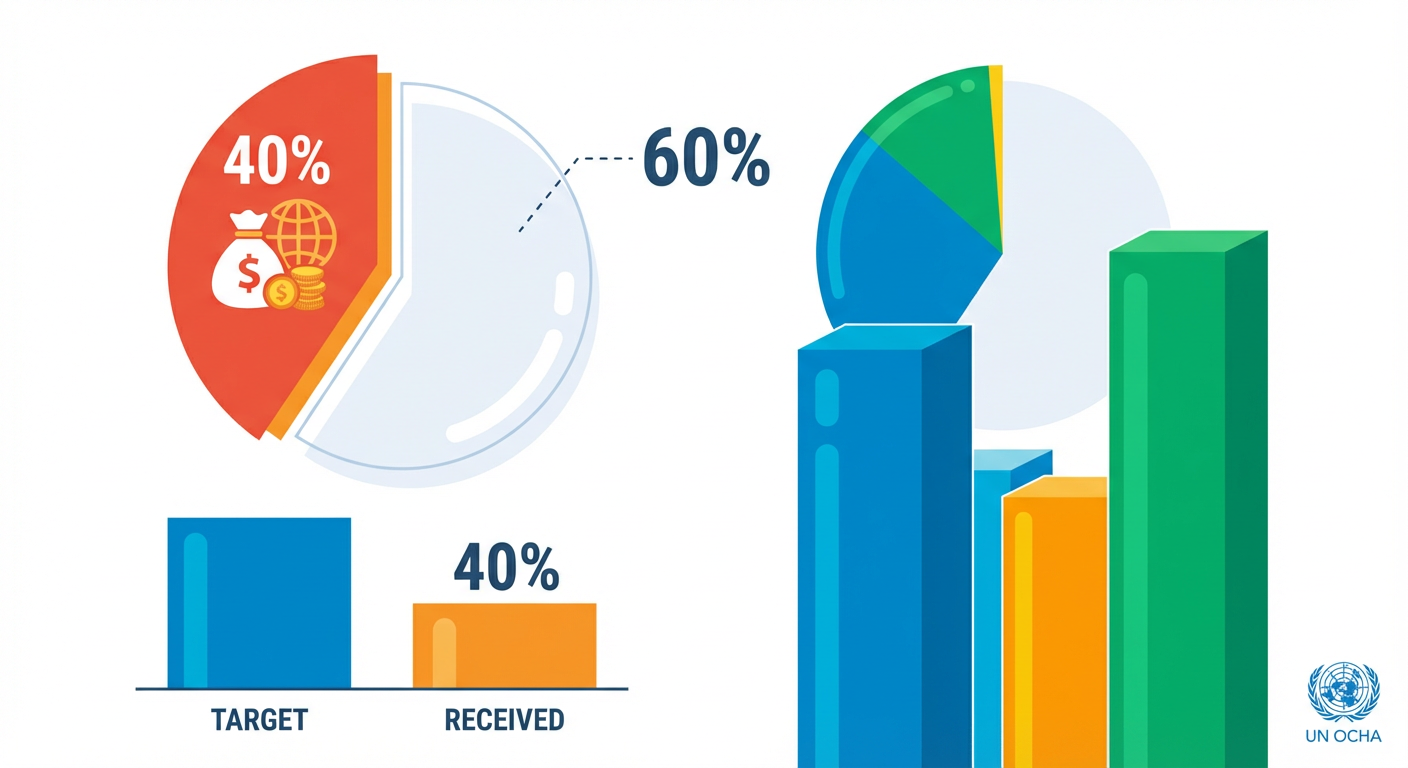
Follow the money, and you start to see where international priorities actually land. The UN Office for the Coordination of Humanitarian Affairs outlined a 2024 response plan for Sudan that required $2.7 billion to provide basic humanitarian assistance. As of early 2025, they had received approximately $1.4 billion. That is a 60 percent funding gap. Think about what that means practically. Medical clinics cannot operate at full capacity. Nutrition programs reach fewer children. Water and sanitation infrastructure gets built more slowly or not at all. The gap is not abstract. It translates into preventable suffering.

The funding shortfall exposes something uncomfortable about international humanitarian commitments. Organizations can sound urgent and concerned in public statements, but when it comes to actually transferring resources, political considerations and donor fatigue kick in. Sudan competes for attention with Ukraine, Gaza, and dozens of other crises, each one legitimate, each one deserving resources. The problem is that the international community has not built funding mechanisms that scale with actual need. Instead, we get a system where the most visible conflicts get resources while equally severe situations struggle. You can track this yourself by visiting UN OCHA Sudan Humanitarian Response Plan and comparing the funding percentages across different humanitarian appeals. The disparities are instructive.

The Security Council Deadlock Shows Why UN Reform Has Moved from Academic Exercise to Practical Necessity

Here is where the story gets directly political in a way that should concern anyone interested in how international institutions actually function. The UN Security Council attempted to pass a binding ceasefire resolution on Sudan in 2024. Russia abstained. China abstained or blocked. The resolution failed. This is not exceptional. The Security Council has struggled repeatedly to take substantive action on Sudan because the permanent members cannot agree. Russia and China have their own calculations about regional influence and relationships with various actors. Those calculations matter more to them than the humanitarian emergency unfolding on the ground.

This is not conspiracy thinking. It is straightforward political economy. Understanding why actors behave as they do does not require assuming hidden malice. It requires recognizing that the Security Council was designed to reflect the geopolitical interests of five powerful nations. When those interests diverge, or when other actors have leverage over those nations, binding action becomes nearly impossible. Sudan exposes this structural reality in a way that forces the question: can the UN function as originally designed, or does it need fundamental reform?

Famine and Atrocities Mark the Moment When International Failure Becomes Undeniable

In August 2024, the Integrated Food Security Phase Classification formally declared famine conditions in Zamzam displacement camp in North Darfur. This was not a prediction or a forecast of what might happen if conditions worsened. This was a declaration that famine was actually occurring. Zamzam camp held approximately 700,000 displaced people living in extraordinarily crowded conditions with limited humanitarian access. The famine declaration was the first globally since Somalia in 2022. That alone should have triggered urgent international mobilization. The response has not matched that threshold.

At the same time, the International Criminal Court issued an arrest warrant related to atrocities linked to the Sudanese Armed Forces in Darfur during 2024. The ICC has a mandate to prosecute mass atrocities, and it issued the warrant. But enforcement depends on state cooperation. States are supposed to arrest and transfer suspects to The Hague. That cooperation has not materialized. Sudan shows a pattern that repeats too often: international institutions with legitimate mandates hitting a wall when it comes to actual enforcement. You can review the humanitarian situation at UNHCR Sudan Emergency Situation Updates for detailed information.

What Reform Actually Looks Like Starts with Understanding What Broke

Sudan has become a case study for reform advocates because it demonstrates failures across multiple levels simultaneously. The Security Council cannot enforce a ceasefire. The humanitarian system cannot raise adequate funding. The ICC cannot enforce warrants. None of these failures happened in isolation. They happened together because they share the same underlying problem: international institutions designed for a different era are being asked to respond to contemporary crises with tools that do not match the job.

Real reform thinking about Sudan does not require naive idealism. It requires asking concrete questions about incentive structures. Why would China and Russia support a binding ceasefire resolution when regional considerations give them reasons to maintain ambiguity? Why would donor nations fully fund a Sudan response when domestic political pressures push them toward other priorities? Why would Sudan cooperate with ICC enforcement when doing so threatens the political positions of its military leadership? Once you ask these questions, you stop looking for villains and start looking for structural changes that would actually shift incentives.

If you are interested in how international institutions could work differently, Sudan is the place to focus your attention. Read the funding reports. Track the Security Council votes. Follow the humanitarian access restrictions. Look at where money actually goes. Real people’s survival is tied to whether international institutions reform or continue functioning along their current broken lines. What patterns do you notice when you dig into the details yourself?